
How Young and Old Come Together
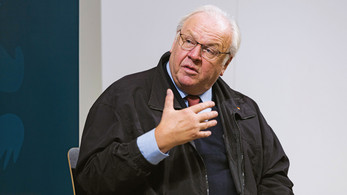
How can we shape demographic change without pitting young people against older people? At a Global Talk hosted by the Club of International Politics e.V., gerontologist Andreas Kruse explains how the generational conflict can be resolved and society strengthened through interaction and collaboration. What this means in concrete terms will become clear that evening—right there on stage.
People are living longer, baby boomers are retiring, and fewer young people are coming up behind them. For Professor Dr. Dr. h.c. Andreas Kruse, demographic change is not an abstract concept, but a call to action. As one of Germany’s most influential gerontologists, he examines aging from various perspectives. As the science of aging, gerontology bridges medicine, psychology, sociology, economics, and politics. It is crucial, he says, not to associate old age solely with illness and burden, but also with personal growth, experience, and social participation.
“When young and old generations come together and work on a project together, we don’t have a generational conflict,” says Kruse, who has been intensively engaged with the topic since the 1980s. In politics, the conflict between young and old is often exaggerated. But when people of different ages actually work together, the supposed opposition usually dissolves on its own. What matters is not that both sides talk about each other, but that they come together to collaborate.

Different generations need to talk to one another more and work together again
This becomes particularly clear when it comes to the world of work. Companies have long been letting older employees go early, even though their knowledge is still needed. Kruse therefore advocates for continuing education well into old age and for teams in which different generations work together. Younger employees bring spontaneous creativity and new ideas, while older employees contribute extensive knowledge and experience, according to Kruse. When both sides come together, this can result in significant benefits—both economic and human.
And that is exactly what becomes evident this evening at the Alfred Colsman Forum. ZU student and moderator Yannick Wölfel asks Andreas Kruse a detailed question about how the experiences of older people could help counter populism, historical amnesia, and extremism. Just before Kruse answers, he pauses: “Well, I find it truly incredible how well you’ve prepared for this. Kudos to you.” Not only Wölfel laughs, but also the audience members in the hall.
On stage, a significantly younger, interested student and a scholar with decades of experience meet as equals. Wölfel listens to Kruse, confidently navigates the many topics, and asks pointed, critical questions—for example, about pensions, political representation, and the consequences of the COVID-19 pandemic. Kruse doesn’t dodge the questions; he occasionally disagrees and continues to think aloud in front of the audience. The conversation brings to light what Kruse had spoken about earlier: Generations don’t have to debate one another or compete against each other; they can talk to one another and think things through together.
How the COVID-19 pandemic has affected the younger generation
This is also evident in areas where potential points of conflict exist. Wölfel asks whether young people were treated unfairly during the COVID-19 pandemic and whether this might pose a threat to democracy. Kruse, who served on the German Ethics Council from 2016 to 2022 and helped advise on issues such as mandatory vaccination, answers with a resounding “yes” on both counts.
The needs of young people have not been sufficiently taken into account. School, friendships, and exploring new experiences together are central to identity development. The consequences are still being felt today: social isolation has risen sharply among adolescents and young adults and has not simply disappeared after the COVID-19 pandemic. Politicians must therefore get closer to the people, become more active in municipalities and counties, and involve different generations more fully—instead of making decisions from a distance.

It requires both personal responsibility and a commitment to the common good
When Kruse turns to the topic of faith, his voice grows softer and more measured. “Human beings are caring by nature,” he says. For him, aging well also means continuing to be needed and being able to do something for others. When addressing the younger generation, however, his voice becomes louder and more assertive. Kruse recounts conversations with Holocaust survivors who wanted to pass on their experiences to young people. Young people should fight for their identity and personal responsibility, but in doing so, they must not forget their responsibility toward others and the common good. Anti-Semitism, fascism, and contempt for humanity must never return. During the Q&A session, a student brings up the average age in the Bundestag. Kruse rejects the idea of a fixed age quota: If people want more young lawmakers, he says, they must encourage young people to get involved, join political parties, and run for office themselves.
In the end, one image in particular lingers from the evening: two people separated by several decades in age, listening to one another and visibly enjoying their conversation.
More articles
 02/13/2025LifeGlobal Talk
Former ambassador Martin Erdmann on Europe's security in transition
In the Global Talk, Martin Erdmann shed light on the challenges facing NATO, transatlantic relations and Turkey's geopolitical role. 08/17/2026LifeInvestor Summit Bodensee
Why Good Ideas Need the Right Connections
For founders seeking funding, the Investor Summit Bodensee is about much more than just a pitch on stage. After all, the most valuable connections are made afterward.- 05/11/2026Lifezu|taten 2026
How a special kind of career fair introduces real questions about the professional world
Workshops, job interviews, panel discussions: students, alumni and companies meet directly at the student-organized career event zu|taten.  01/19/2026LifeField report: Seminar on "Poverty and wealth"
What social inequality really means
Every year, a seminar takes Zeppelin University students to the German capital Berlin. This time, the topic was "Poverty and wealth".