

Chair of International Relations
Open Calls


Latest news
Publications
Interviews & Public Engagement
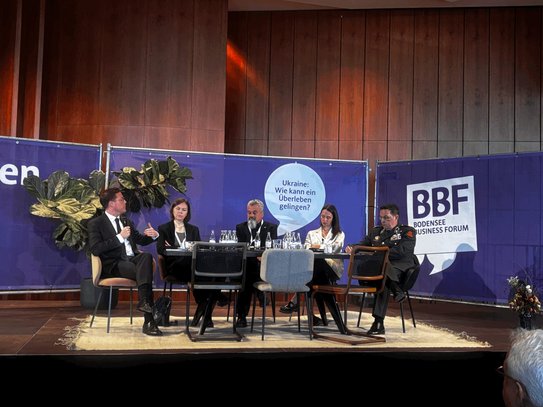
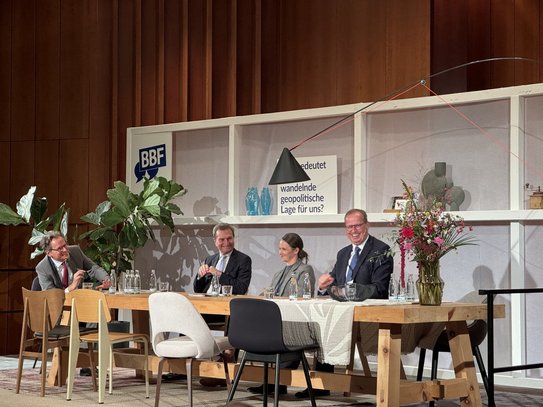
Conferences & Workshops
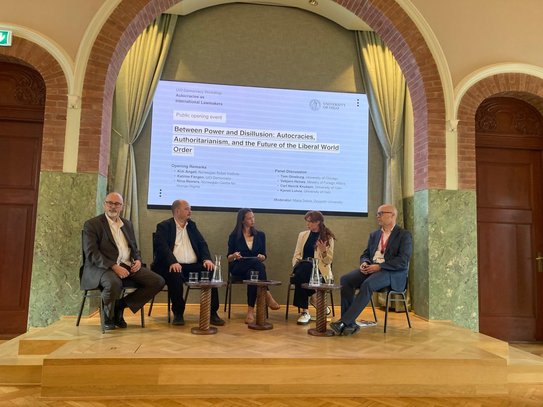
Activities at Zeppelin University
Profile
The discipline of International Relations deals with interactions among sovereign states, non-state actors, international institutions, and individuals across state borders. Key themes include globalization processes, global power dynamics, as well as conditions for cooperation and conflict. With a focus on understanding the complexities of global order, International Relations provides insights into the dynamics shaping our interconnected world.
The Chair of International Relations at Zeppelin University is situated at the intersection of international and comparative political sciences. Challenges posed by the autocratization of political systems, processes, and discourses, especially in established democracies and the rise of powerful autocratic regimes such as China, Russia, or Saudi Arabia, have gained significant importance in the last decade. Research and teaching at the chair address this central question of power concentration and legitimate exercise of power, along with the consequences for international politics and institutions.
The following focal points are offered at the chair:
- International Perspectives of Democracy and Autocracy
- International Organizations
- Regional Cooperation in the Global South
- International Sanction Politics
Teaching
The Chair offers both introductory courses on international relations and advanced seminars. Basic seminars include the teaching of central theoretical concepts and the genesis of research on international relations as well as the empirical analysis of different types of international cooperation, the central state and non-state actors and suitable research methods.
Advanced seminars deal with the topics of international organizations as central arenas of international cooperation, the role of democracy and autocracy in international politics as well as current geopolitical challenges and transformations of multilateral cooperation.
In all seminars, the focus is on understanding qualitative and quantitative methods and on dealing with regions of the Global South.
As part of its research focus, the chair also offers supervision for final theses. Consultation appointments by individual arrangement by e-mail.
Courses regularly offered at the Chair:
- Critical Approaches to International Relations and Global Governance - Gender, Power, Populism (Clara Böning)
- Critical Perspectives on Global Governance (Clara Böning)
- Autocracies in International Politics (Maria Debre)
- Sanctions in International Politics (Maria Debre)
- Introduction to International Relations (Maria Debre)
- Global Governance (Maria Debre/Clara Böning)
Research interests
Current projects
Bad Neighbors, Good Company?
This project, funded by the Fritz Thyssen Foundation (2025-2027), investigates how regional organizations (ROs) contribute to autocratization processes - especially in the Global South. While ROs are often seen as guarantors of stability, the project introduces the concept of hybrid regional organizations: organizations in which democracies and autocracies coexist and spread authoritarian practices within the membership and beyond. The focus is on disputes over content control, freedom of expression and the role of the state in the digital space. Using a mixed-methods approach that combines statistical analysis, discourse and case studies, the project shows how ROs promote autocratization through the legitimization of digital sovereignty practices- and what consequences this has for political development and digital governance. A first project paper on the role of regional organizations as a place for policy transfer and learning is available in 2025 in Comparative Security Policy (with Stephen Hall).
Autocracies as International Lawmakers
This project (2024-2025), funded by UiO:Democracy (University of Oslo) in collaboration with Nina Reiners, is located at the intersection of international relations and international law. Building on the growing concern about the emergence of "authoritarian international law", the project analyzes the behavior of autocratic states within the United Nations (UN). To this end, a comprehensive data and text corpus was created to examine when and on which topics autocracies submit resolutions to the UN's Sixth Committee (Legal Committee), which resolutions they support as sponsors and which they block. As part of the project, a workshop was held at the University of Oslo and the Nobel Institute Oslo in June 2025.Autocracies in Global Governance - ECPR Research Network
While democracy has long dominated debates in international relations, the role of autocracies is gaining urgent attention. Our network brings together scholars exploring how authoritarian regimes shape global politics-from challenging international norms and reshaping institutions to creating rival alliances and disrupting peace and security. We examine how rising authoritarianism is transforming global governance-and why it matters.For more information, follow us on LinkedIn or become a member to get regular updates about activities (you only need an ECPR account, no membership).
Autocratization, Policy Preferences, and the Performance of International Organizations (APPIO) (with Thomas Sommerer)
The DFG-funded project (2026-2029) investigates how the autocratization of membership structures of international organizations affects their performance and legitimacy. APPIO combines innovative methods such as automated text analysis, survey experiments and interviews with classical statistical methods and case studies. The project develops three data sets on the political output performance of 72 IOs, on the performance of international bureaucracies in the form of scientific publications, and on the voting behaviour and sponsorship of resolutions by autocratizing states comparatively across 72 organizations. The project thus contributes to a better understanding of the question of whether and how IOs remain capable of acting and legitimate under the pressure of autocratization. A first project paper has been published in 2025 in Cooperation and Conflict.
Hollow Multilateralism
This project (2026-2028), funded by the Japan Society for the Promotion of Science (JSPS) and led by Daniëlle Flonk (Hitoshubashi University Japan), investigates the role of autocratic states as international norm-entrepreneurs. We analyse how autocracies try to influence discourses within international organizations in order to legitimize autocratic practices and thereby undermine liberal values. The focus is on two policy areas: the regulation of the internet as a new, dynamic policy field and international human rights protection - in particular the protection of civil society participation rights - as an established field. Case studies, discourse and document analyses are used. An article on the concept will be published in 2025 in International Affairs was published in 2025.
Finished projects
The Decline and Death of International Organizations
More information on the project can be found here

About Clara Böning: Teaching & Research
Professor

| Phone: | +49 7541 6009-1411 |
| Room: | SMH Semi | 0.03L |
Research Fellow

Assistance

Student Assistant


Venmann, Philipp
Bachelor student
send e-mail