

Wide Disparities and Varying Levels of Transparency in Top Management Salaries at Public Companies
Friedrichshafen. Compensation for top management at public companies has risen by 4.1 percent compared to the previous year. At the same time, individual-level disclosure at the municipal level—at just 19.6 percent—remains significantly below transparency requirements. This is shown by the recently published Public Pay Study 2026 by Zeppelin University (ZU).
The Public Pay Study 2026 analyzes the level, structure, and disclosure of top management compensation in public companies and highlights prospects for sustainable compensation structures. The study examined 10,400 top management members from 7,145 public enterprises in cities with a population of over 30,000, in rural districts, and at the federal and state levels. In total, compensation data for 2,139 individuals from 1,124 public-sector companies were identified.
Remuneration trends vary across sectors: In the “Municipal Utilities, Energy & Water Supply” sector, the increase is 2.4 percent, while savings banks—despite already having the highest remuneration levels—recorded an increase of 5.3 percent, more than double that of other sectors. Finally, there was no increase for hospitals. While compensation in the high-pay bracket rose by 5.7 percent, it remained constant in the low-pay bracket.
The average compensation level is 186,000 euros, though there are substantial differences between industries and company sizes. A total of 35.7 percent of top management members receive compensation below 150,000 euros, 45.1 percent receive between 150,000 and 300,000 euros, 14.1 percent between 300,000 and 500,000 euros, and 5.1 percent over 500,000 euros. In the “Municipal Utilities, Energy & Water Supply” (273,000 euros) and “Public Transit/Transportation & Logistics” (202,000 euros), compensation is significantly higher than, for example, in the “Health & Social Services” sector (115,000 euros). Company size explains part of these differences; however, differences also exist between companies of the same size in different sectors. Savings banks continue to have the highest median at 439,000 euros.
Significant sectoral differences are also evident in variable compensation—performance-based components such as profit-sharing, annual bonuses, or performance bonuses. In the “Municipal Utilities, Energy & Water Supply” sector, its share of total compensation—at 18.4 percent—is significantly higher than that of savings banks, at 10.2 percent. Compared to the previous year, the share increased by nearly the same amount—about one percentage point—in both sectors, while it declined by 4.5 percentage points for hospitals. Among cases with relevant data, variable compensation is not paid in 12.0 percent of municipal utilities and 25.4 percent of savings banks—more than twice as often in the latter.
The culture of transparency regarding compensation varies enormously. While the rate of individual-level disclosure at the municipal level remains low at just 19.6 percent, some federal states and cities have already achieved a very high level of transparency and made it the norm. Publicly owned enterprises held directly disclose compensation more frequently than those held indirectly. Among direct holdings, Berlin, Dortmund, Duisburg, Essen, and Wiesbaden, as well as the federal government, achieve transparency rates of more than 90 percent. Public broadcasting has a disclosure rate of 100 percent. These positive examples demonstrate that this is achievable and set the standard for all local governments and public enterprises.
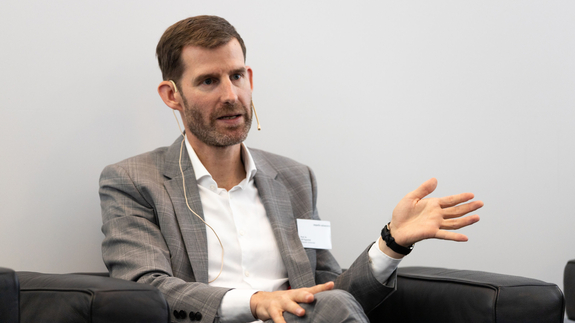
“Top management compensation is a key indicator of good corporate governance. Across the board, we need fair pay and an end to debates fueled by envy. Through transparency laws and public corporate governance codes, full compensation transparency—including pension benefits and a peer group for determining compensation levels—should be implemented everywhere,” explains Professor Dr. Ulf Papenfuß, holder of the Chair of Public Management & Public Policy at ZU.
The “Public Pay Study 2026: Top Management Compensation in Public Enterprises—Perspectives for Digital Governance and Sustainable Compensation Structures” is a joint study with LAB & Company Düsseldorf GmbH, which is supporting the practical discussion of this topic.
The full study is available for download at puma.zu.de