"There is a lack of a viable vision for the future"
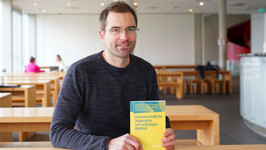
Why concerns about a democracy incapable of reform are nothing new, why major reforms have failed to materialize despite numerous crises, and what pensions have to do with it: An interview with Professor Dr. Christian Adam, holder of the Chair in Comparative Political Science.
Professor Adam, the CDU/CSU and the SPD state in their coalition agreement that a lack of structural reforms erodes trust in the government. In his bestseller, journalist and columnist Robin Alexander even speaks of the “last chance” for the centrist parties. Has our democracy become incapable of reform?
Prof. Dr. Christian Adam: This concern is much older than many people realize. In the 1970s—amid the oil crisis, inflation, and economic stagnation—then-SPD Chancellor Willy Brandt feared that parliamentary democracy in Europe might only survive another 20 or 30 years. Shortly thereafter, a report by the Trilateral Commission diagnosed a full-blown crisis of democracy. The reasoning was that more and more social groups were placing ever-higher expectations on the state, thereby overburdening it. Samuel Huntington, one of the authors, however, put this diagnosis into perspective 25 years later. His argument: Prophecies of doom, fortunately, rarely come true because they prompt people to actively counteract the feared collapse.
Democracies are not inherently incapable of reform anyway. The phase-out of nuclear power, marriage equality, smoking bans, the introduction of the euro: fundamental changes do occur; they just unfold differently than we expect. In political science, we compare this to plate tectonics. For a long time, nothing seems to happen because the change takes place below the threshold of perception; then the pressure suddenly releases in a reform earthquake.
There are plenty of crises right now: artificial intelligence, climate change, geopolitical upheavals, and a faltering economy, to name just a few. So why hasn’t this major reform earthquake materialized yet?
Adam: For one thing, the hurdles have gotten higher. In Europe’s multi-level system, more actors can block a decision, and many issues are now legally codified in such a way that policymakers simply lack the necessary leeway. Added to this are more political parties and, consequently, more complicated coalitions, as well as emotional polarization: The political camps are not only at odds over policy issues; they also have little sympathy left for one another. This makes it difficult to work together and reach compromises.
However, there is no shortage of pressing problems; rather, there is a lack of a credible vision for the future that weaves economic, technological, and geopolitical changes into a positive outlook. This is crucial, because reforms almost always create losers, who are much easier to mobilize than the winners. Those whose benefits are cut take to the streets; those who benefit from the fact that tax increases won’t be necessary in the future don’t take a single day off to protest. In France, for example, sustained protests have even reversed reform efforts. Without a positive vision, politics simply becomes the most efficient possible management of scarcity. With such a vision, it is easier to win supporters, and people are more willing to endure temporary hardships.
Can you explain that using a specific example?
Adam: Take pensions, for example. The solutions to demographic change have been on the table for years: a higher retirement age, higher pension contributions, lower pension benefits, and more private retirement savings. We actually know what needs to be done. But what vision of the future lies behind this? We’re averting collapse; we’re preventing the worst-case scenario; pensions will be “less bad” than they otherwise would be. Finding supporters for this isn’t impossible, but it’s very difficult. Yet it has long been unclear whether the pension system can even survive within its current framework. After all, the pension system is financed primarily by contributions from gainful employment. But what happens when automation and artificial intelligence fundamentally change job profiles? When industrial value creation—which has been a cornerstone until now—is lost in Germany? And how long will we remain an export-oriented nation in a world of rising tariffs? Such questions are scarcely discussed in the current reform debate.
In public discourse, there is often talk of a “reform backlog.” Does this term accurately describe the situation?
Adam: The image of a traffic jam suggests that we know what needs to be done: identify the cause, manage the traffic. But one could also describe the situation as a crisis of transformation. In that case, it’s more like a ship that needs to be rebuilt while out on the open sea. Everything is happening simultaneously and is interdependent; society is entering uncharted territory, and much of what we previously knew is losing its value. So the question is whether we’re still stuck in a reform gridlock or whether we’re already in the midst of a transformation crisis.
One thing is clear, however: where a vision for the future is lacking, a vacuum emerges—and that, in turn, leaves us vulnerable to attack. Steve Bannon, one of Trump’s campaign strategists in 2016, accused the established parties of merely managing America’s decline and countered with his own promise: “Make America Great Again.” The lack of visions for the future is therefore not merely a communication problem for the parties, but a societal problem affecting the entire society. Politics alone cannot design such a vision. It must emerge where technology, the economy, and politics converge.
More articles
 03/12/2026ScienceGuest article by PD Dr. Martin R. Herbers
Kick-off without a blueprint: What the state election in Baden-Württemberg reveals about the super election year 2026
After the state elections in Baden-Württemberg, the search for the "great lesson" begins. Is it just a revealing prelude or even a blueprint? 12/16/2025ScienceMobility cooperatives
Better to share than (not) own
Innovation researcher Matthias Weiss talks in an interview about the potential, opportunities and challenges of mobility cooperatives. 11/25/2025ScienceDigital technologies in communication
Trust is about understanding
PD Dr. Martin R. Herbers explains how the digital transformation is challenging our democracy and how communication science can meet this challenge. 01/28/2025ScienceDemocracy and the Office of the President
Pen strokes and felt-tip pens for the people
What we are currently seeing in the USA shows how populism imagines political leadership and problem solving.