

Arts Production and Cultural Policy in Transformation
Cultural Production in the Context of Social Change
News
-
![تواصل [Tawasol] Cultural Production and Policy Network](data:image/svg+xml;charset=utf-8,%3Csvg%20xmlns%3D%22http%3A%2F%2Fwww.w3.org%2F2000%2Fsvg%22%20width%3D%223840%22%20height%3D%222560%22%20style%3D%22background-color%3Atransparent%22%3E%3C%2Fsvg%3E)
تواصل [Tawasol] Cultural Production and Policy Network
20 students of cultural studies form the core of the newly launched 'تواصل [Tawasol] Cultural Production and Policy Network’. The three partner universities Zeppelin ... -

Symposium: The Future of the Classical Concert
What constitutes the concert experience? Why are people motivated to attend concerts? What do they expect and what do they experience there Is there a specific audience ... -

Journal of Cultural Management and Policy | Vol. 9, Issue 1: Socially Engaged Art in a New World Order
The Journal of Cultural Management and Cultural Policy offers international perspectives on a variety of topics in the research and practice of cultural management and ... -
Journal of Cultural Management and Cultural Policy | Vol. 7, Issue 2: Transformation and Upheavals: The Effects of Crises and Conflicts on the Arts
The Journal of Cultural Management and Cultural Policy offers international perspectives on a wide range of issues in cultural management and cultural policy research ... -

Second International Working Meeting “Cultural Policy Transformations: The Rise of Illiberalism”
Second international working meeting in Fall 2020 | Together with several international guests the woking meeting investigates how illiberalism and authoritarian ... -
International Working Meeting “Cultural Policy Transformations: The Rise of Illiberalism”
The international working meeting “Cultural Policy Transformations: The Rise of Illiberalism” took place on 5 and 6 March 2020 at Zeppelin University with the ... -

FEINART – The Future of European Independent Art Spaces in a Period of Socially Engaged Art
FEINART is an extensive collaborative project between degree-awarding research centres in political philosophy, art theory and practice, curatorial studies, and cultural ... -

ECR – Experimental Concert Research
The classical concert is a highly advanced format of performance and reception. But which parameters of this heavily ritualised procedure are central to the concert ... -
Journal of Cultural Management and Cultural Policy (JCMCP)
The “Journal of Cultural Management and Cultural Policy” is dedicated to international perspectives that address a wide range of issues in cultural management and ...
![تواصل [Tawasol] Cultural Production and Policy Network](/info-wAssets/img/weblication/wThumbnails/dscf3165-3a2a3f9c-8ab2f233@ll.jpg?1720504421)


The Research Cluster
Keywords such as “globalisation,” “demographic shifts,” and “digitisation,” alongside changes in everyday work and life and the crises of the climate, the EU, and the democratic order as a whole, encompass the current upheavals facing society. Against this backdrop, the roles of cultural institutions, cultural policy, and cultural work are also changing profoundly. This research cluster investigates the connections between these societal developments and future potential forms of the production, distribution, and reception of the arts and culture.

How can cultural policy and cultural organisations react to the fragmentation of audiences, that is, of the public sphere? What challenges and changes do cultural organisations, institutions, and networks face, and what roles do they play in society in the wake of the current upheavals? Which forms of interpretation and action are being concieved by those involved in the production of art and culture under the current pressure to change? How are the self-understanding and working methods of artists and cultural managers shifting, and how is cultural policy being adapted in turn? To what extent is the “cultural audience” transforming? The ACPT cluster addresses these and other questions in various research areas. It analyses practices and formats of arts production, cultural organisations, and cultural-political discourses and their institutionalisation, as well as the reshaping of audiences and the cultural public.
Cultural institutions, their visitors, and cultural policy are interdependent and intertwined. The questions addressed in the cluster therefore require complex, multi-perspective approaches. Accordingly, the cluster operates internationally, interdisciplinarily, and across generations of scientists and practitioners. Subproject sponsors include the Volkswagen Foundation’s Off the Beaten Track initiative, the EU Commission’s Marie Skłodowska-Curie Innovative Training Networks, the Swiss National Science Foundation, and the Studienstiftung des deutschen Volkes.
Research Areas
Transformation of Presentation Formats


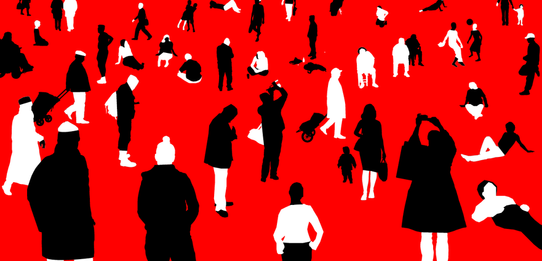
Audience Transformation and the Change of Political and Cultural Publics
Transformation of Cultural Institutions
Transformation of Cultural Politics
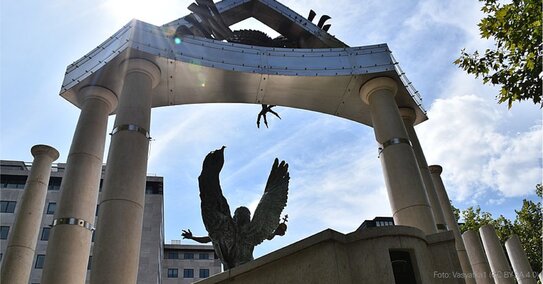
Cultural Hybridity – Policy and Aesthetics in Contemporary Hybrid Cities
Research Cluster Team
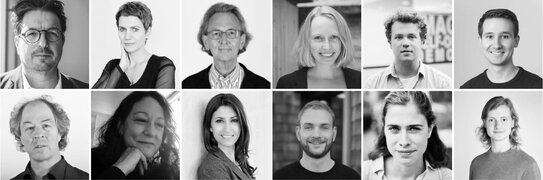
Tröndle, Martin | Prof Dr

van den Berg, Karen | Prof Dr

Göttlich, Udo | Prof Dr

Schultheis, Franz | Prof Dr
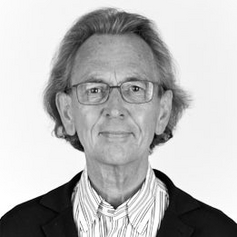
DeVereaux, Constance | Assoc Prof

Lettau, Meike | Jun-Prof Dr
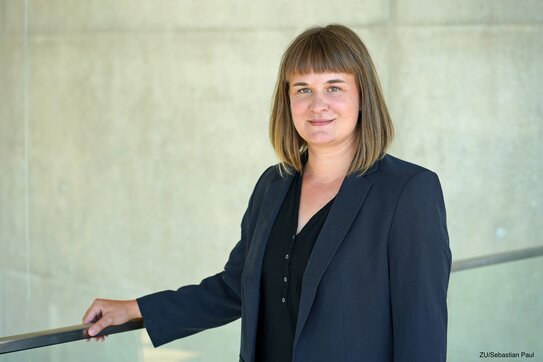
Brand, Michèle | MA

Weining, Christian | MA

Former Team Members
- Schmitz, Jana BA | Undergraduate Assistant
- Schad-Spindler, Anke PhD | Post-Doc | Personal website
- Stahl, Julian MA | Doctoral Student | Dissertation project
- Aglibut, Coco Lina BA | Undergraduate Assistant
- Stockmann, Nico MA | Undergraduate Assistant
- Labaronne, Leticia PhD |Post-Doc | Website