Keywords such as “globalisation,” “demographic shifts,” and “digitisation,” alongside changes in everyday work and life and the crises of the climate, the EU, and the democratic order as a whole, encompass the current upheavals facing society. Against this backdrop, the roles of cultural institutions, cultural policy, and cultural work are also changing profoundly. This research cluster investigates the connections between these societal developments and future potential forms of the production, distribution, and reception of the arts and culture.

How can cultural policy and cultural organisations react to the fragmentation of audiences, that is, of the public sphere? What challenges and changes do cultural organisations, institutions, and networks face, and what roles do they play in society in the wake of the current upheavals? Which forms of interpretation and action are being concieved by those involved in the production of art and culture under the current pressure to change? How are the self-understanding and working methods of artists and cultural managers shifting, and how is cultural policy being adapted in turn? To what extent is the “cultural audience” transforming? The ACPT cluster addresses these and other questions in various research areas. It analyses practices and formats of arts production, cultural organisations, and cultural-political discourses and their institutionalisation, as well as the reshaping of audiences and the cultural public.
Cultural institutions, their visitors, and cultural policy are interdependent and intertwined. The questions addressed in the cluster therefore require complex, multi-perspective approaches. Accordingly, the cluster operates internationally, interdisciplinarily, and across generations of scientists and practitioners. Subproject sponsors include the Volkswagen Foundation’s Off the Beaten Track initiative, the EU Commission’s Marie Skłodowska-Curie Innovative Training Networks, the Swiss National Science Foundation, and the Studienstiftung des deutschen Volkes.
What effects do presentation formats have on various types of visitors? Which factors influence aesthetic experience? Is it the work and its appearance, the visitors with their prior knowledge, preferences, and expectations, or the curatorial or dramaturgical framing that decisively shapes the aesthetic experience of an artistic work? We investigate the complex interrelation of “subject,” “work,” and “form of presentation” in this ACPT research area on the basis of two multi-year international research projects: eMotion – Mapping Museum Experience, and Experimental Concert Research.
Tröndle, Martin Prof Dr
WÜRTH Chair of Cultural Production
Weining, Christian MA
“(Concert) Audience Typologies”

Changing audience formations, audience fragmentation, changing habits of use and behaviours, new types of tastemakers, new categories of (non-)visitors, novel habits of use, new cultural publics—all are sub-areas that touch on the question of how the transformation of cultural production affects the establishment of cultural publics with their audiences.
(22–27.07.2019)
Göttlich, Udo Prof Dr
Chair of Media & Communication Science
The question of the transformation of publicly funded institutions is addressed in two ways. Firstly, we ask: What challenges are (publicly funded) cultural institutions confronted with in regard to societal transformations, and what are their responses to these challenges? These questions touch on aspects of organisational learning, leadership, evaluation, and the strategic management of cultural institutions. Three current doctoral projects dedicated to these topics in the field of culture-specific organisational research consider these questions further.
Secondly, to accompany this internal perspective, we are examining an external one, namely the influence of cultural policy on cultural institutions. The question of which function culture should fulfil for society is negotiated in political agendas, funding guidelines, and position papers. Additionally, since the 1970s, Germany has developed various temporary funding formats, projects, and programmes that have clear objectives and require justifications for funding. This approach has led to quantitatively evaluated topics such as “audience development” becoming guiding principles in official cultural policy. Such issues are discussed at length in policy papers and funding guidelines, but how are these official guiding principles actually implemented in institutions? What changes in organisational structure and self-perception have they brought about? Individual case studies are used to examine which organisational challenges and social transformations institutions are responding to and how they are responded to them, as well as whether the dispositif of political “guiding formulas” and “institutional anchoring” is really consistent across publicly funded institutions, or whether breaks and opposing movements can be seen among them.
Tröndle, Martin Prof Dr
WÜRTH Chair of Cultural Production
Lettau, Meike Jun-Prof Dr
Junior Professor for Cultural and Media Policy Studies
DeVereaux, Constance Assoc Prof
University of Connecticut
Stahl, Julian MA
“Organized (Dis)Order: Cultural Organizations within the Network Society”
In some nation states (e.g., the US, Poland, Hungary, Italy, the UK, Israel, and Greece), populist and nationalist political movements are questioning the value publicly financed art and culture has for the community today. How is the (radical) political repositioning of these countries affecting their cultural policies? How are budget cuts, censorship, media control, a narrowed concept of culture, and attempts to politically control the management personnel of cultural institutions influencing cultural creation in these places? What influence do right-wing and left-wing populist parties in these countries and beyond exert on cultural-political discourse and artistic and cultural creation? This ACPT research area also examines opposing movements—in particular civil society–centered arts and culture initiatives—that may offer alternative governance formations.
A further part of this project is devoted to the emergence of cultural-political metadiscourses, such as “new cultural policy,” “cultural education,” and the “cultural struggle”—or the “Resistance against Modernity and Western Decadence,” as the slogan of the Polish right-wing populist Law and Justice (PiS) party puts it. How are these metadiscourses produced, and how do they become effective in the field of cultural politics? What influence do they have on funding decisions?

In 2020, the research cluster hosted two international working meetings with the title “Cultural Policy Transformations: The Rise of Illiberalism”, which tool place in March 2020 at Zeppelin University and in October 2020 online. The conferences addressed issues of current international cultural policy and transformation, and in particular the increased presence of illiberal, populist parties and movements in this field. Together with our international guests, we discussed ways of dealing with corresponding developments as well as possibilities for research cooperation.
Tröndle, Martin Prof Dr
WÜRTH Chair of Cultural Production
Lettau, Meike Jun-Prof Dr
Junior Professor for Cultural and Media Policy Studies
DeVereaux, Constance Assoc Prof
University of Connecticut
Zeppelin University
Preservation of culture and of cultural diversity are central policy aims at the international and national level. These dual aims have been connected to both economics (tourism, creative industries) and politics (local cultural development, empowerment of marginalised groups) as means to achieve positive governmental aims. The international organisation UNESCO, for example, has articulated cultural diversity and preservation of culture as central to their global mission.
Critics of these policies maintain that cultural preservation impedes the development of culture, retarding the natural dynamics of aesthetic processes present in society. Similarly, critique of “diversity” as a policy aim argues that it constrains and impedes beneficial social and artistic exchange by limiting creative innovation.
“In contemporary society we are all more prone to live hybrid lives in culturally hybrid spaces.”
With these realities as a backdrop, we look at cultural hybridity through policy, philosophies of art, and the aesthetics of everyday, practical life. A central argument is that in contemporary society we are all more prone to live hybrid lives in culturally hybrid spaces. Evidence may be seen in the fact that many global cities have come to be described as “hybrid” societies where cultures mix, almost seamlessly in the aesthetic realm. Identity, art, culture, and social engagement should operate differently, it seems, in culturally hybrid spaces.
Cultural hybridity is also the focus of challenge. Many people see its manifestation as a remnant of colonialism—the physical signs of cultural dominance and repression written in the art and architecture of a city.
Some questions to be answered is whether cultural hybridity requires policy support, and if so, what kind, precisely? Is it to be preserved and supported, or discouraged and eradicated? Is cultural hybridity an inevitable part of contemporary, globalised living that needs no policy intervention? Given cultural economic development in the 21st century, one could also ask if hybrid cities are necessarily and inevitably neo-liberal no matter where they exist? Finally, how do we understand artistic production in the context of cultural hybridity? How is it both supported and contested in political, social, and economic contexts.
DeVereaux, Constance Assoc Prof
University of Connecticut
Zeppelin University


Speaker of the Cluster
Professor | WÜRTH Chair of Cultural Production
Write an Email
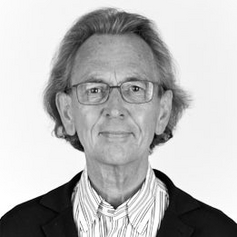
Since 2015, Prof Dr Martin Tröndle has held the WÜRTH Chair of Cultural Production in the Faculty of Communication and Culture at Zeppelin University, Friedrichshafen. His work deals with a large variety of topics, all revolving around the production, distribution, and reception of the arts. Tröndle was the principal investigator of eMotion – Mapping Museum Experience (2008–14), supported by the Swiss National Science Foundation. eMotion experimentally analysed the experiences of museum-goers, looking primarily at the museum architecture, art objects, and curatorial design and how these effect and affect the behaviour of museum visitors. Tröndle is now principal investigator of Experimental Concert Research (2018–), supported by the Volkswagen Foundation and others, a project that experimentally analyses the concert experience. Since 2014, Tröndle has been Editor-in-Chief of the peer-reviewed journal Zeitschrift für Kulturmanagement: Kunst, Politik, Wirtschaft und Gesellschaft / Journal of Cultural Management: Arts, Policy, Economics, and Society. Among others, he is the editor of the two-volume concert studies reader Das Konzert: Neue Aufführungskonzepte für eine klassische Form (2011, 2nd ed.) and Das Konzert II: Beiträge zum Forschungsfeld der Concert Studies (2018).

Professor | Chair of Art Theory & Curating
Karen van den Berg is Professor of Art Theory and Curating at Zeppelin University, Friedrichshafen. She studied art history, classical archaeology, and Nordic philology in Saarbrücken and Basel. Her doctoral thesis on Matthias Grünewald was supervised by Gottfried Boehm and received support through a Friedrich Naumann Foundation stipend. Van den Berg also earned the Max-Imdahl-Stipendium für Kunstvermittlung in 1994–96. From 1993 to 2003, she was a regular lecturer and research fellow for art history and theory at Witten/Herdecke University, and research stays and teaching posts have brought her to numerous internationally acclaimed institutions, including the Chinati Foundation in Marfa, Texas; Bauhaus University, Weimar; Parsons New School for Design, New York; and Europäisches Kolleg Jena. She was also a visiting scholar in the Department of Comparative Literature at Stanford University in California and a fellow at Internationales Kolleg für Kulturtechnikforschung und Medienphilosophie (IKKM) in Weimar. Her research focuses on the theory and history of display, museums, educational architecture, art and politics, artistic epistemes, art market studies, and studio practice.

Udo Göttlich is Professor of General Media and Communication Studies at Zeppelin University, Friedrichshafen. His main areas of work and research are media, communications and cultural sociology, reception and audience research, cultural studies approaches, theory of public sphere, and sociological theory.

Senior Professor for Sociology of Art and the Creative Economy
Franz Schultheis is Senior Professor of Sociology of Art and Creative Industries at Zeppelin University, Friedrichshafen. He received his doctorate from the University of Konstanz, followed by his habilitation at the École des hautes études en sciences sociales, Paris, under Pierre Bourdieu. Prior to his professorship at Zeppelin University, Schultheis held posts at the universities of Neuchâtel, Geneva, and St. Gallen in Switzerland. He was also Research Councillor at the Swiss National Science Foundation (2000–10) and Vice President of the Swiss Science Council (2010–19), both in Bern, and has been President of the Bourdieu Foundation, St. Gallen, since 2007. Schultheis is a member of the editorial board of Actes de la Recherche en Sciences Sociales; co-editor (with Stefan Egger) of Pierre Bourdieu’s collected writings, published by Suhrkamp; editor of the series Questions sociologiques, released by Edition L’Harmattan, Paris; and Vice President of the publisher Les Éditions Raisons d’Agir, Paris.

Research Associate | Research Cluster Arts Production and Cultural Policy in Transformation
Write an Email
Constance DeVereaux is Associate Professor and Director of the MFA program Arts Leadership and Cultural Management at University of Connecticut. She studied political philosophy, public policy, and legal theory at Claremont Graduate University in the US, completing her doctorate with the thesis: Artist, Citizen, State: A Theory of Arts Policy. As a Fulbright Senior Specialist, she has provided expertise to universities, municipalities, and organisations in South Africa, Romania, and Finland on matters of cultural policy, cultural management, and culture-led development. She is a member of the international research team UNESCO and the Making of Global Cultural Policy funded by the Australian Research Council. She serves on the executive editorial board of the Zeitschrift für Kulturmanagement: Kunst, Politik, Wirtschaft und Gesellschaft / Journal of Cultural Management: Arts, Policy, Economics, and Society.
Her research interests include culturally sustainable entrepreneurship, cultural hybridity, and the use of narrative for cultural policy analysis. Recent published works include Arts and Cultural Management: Sense and Sensibilities in the State of the Field and Narrative, Identity, and the Map of Cultural Policy: Once Upon a Time in a Globalized World. She has also published articles in Journal of Cultural Management and Policy, the Annals of Tourism, the Journal of Arts Management, Law, and Society, Kultūros Barai, and Philosophia.

Jun-Prof Dr | Junior Professorship for Cultural and Media Policy Studies
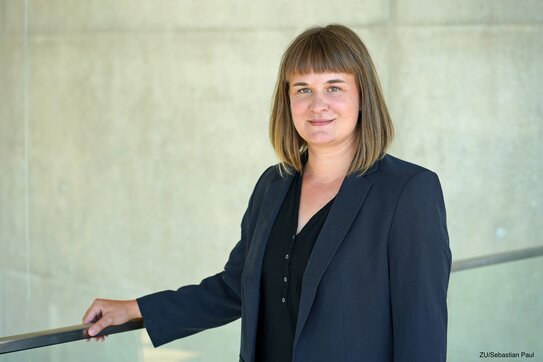
Jun.-Prof. Dr. Meike Lettau holds a Junior Professorship in Cultural and Media Policy Studies at Zeppelin University Friedrichshafen, Germany. Her research interests include foreign cultural policy, international cultural relations, artists as agents of change, cultural activism, sociopolitical transformation processes and culture in conflict regions, among others.
She is currently leading the DAAD-funded project تواصل [Tawasol] Cultural Production and Policy Network, which investigates the socio-political dimensions of artistic formats between the WANA region and Germany, with 20 fellows from Germany, Tunisia and Lebanon.
Previously, she was academic associate at the Institute for Cultural Policy at the University of Hildesheim, Germany, and coordinator of the Graduate School ‘Performing Sustainability: Cultures and Development in West Africa’ which is implemented in cooperation with the University of Maiduguri, Nigeria, and the University of Cape Coast, Ghana. She has worked for various cultural institutions in Germany and abroad (Goethe-Institut/Max Mueller Bhavan Pune, KHOJ International Artists’ Association, ARThinkSouthAsia, Cultural Innovators Network (CIN), Institute for Foreign Cultural Relations (ifa), Internationale Gesellschaft der bildenden Künste (IGBK), German Corporation for International Cooperation (GIZ)).
To Junior Professorship for Cultural and Media Policy Studies

Research Fellow | Junior Professorship for Cultural and Media Policy Studies
Michèle Brand (*1989) is academic associate at the Chair of Cultural and Media Policy Studies at Zeppelin University. She is the academic coordinator of the DAAD-funded project "تواصل [Tawasol] - Cultural Production and Policy Network".
She completed her B.A. in Cultural Studies and French Philology at the University of Potsdam as well as a German-French M.A. in Cultural Mediation/Médiation Culturelle des Arts at the University of Hildesheim and Aix-Marseille Université (Marseille, France). She is currently pursuing her PhD on "Cultural work as crisis prevention in the context of foreign cultural policy taking the example of the Republic of Mali." From 2017 to 2022, Michèle Brand worked as research assistant at the Department of Cultural Policy at the University of Hildesheim. She was responsible for the implementation of a research cooperation with the Gesellschaft für internationale Zusammenarbeit (GIZ) in Mali as well as and scientific support of the GIZ project "Donko ni Maaya - Crisis prevention and strengthening social cohesion through the promotion of the cultural sector in Mali". Prior to that she was program coordinator for the project ARTS RIGHTS JUSTICE to promote artistic freedom of expression and protection of persecuted artists, funded by the German Federal Foreign Office. As part of her employment, she organized various research workshops and trainings with academic and civil society partners in Lebanon, Tunisia, Mali and Germany.
In addition to her academic activities, Michèle Brand worked as a freelancer in the fields of evaluation for the Grimmwelt Kassel and in project coordination for the non-profit association coculture e.V. in the support of and contact with artists at risk. As a CrossCulture scholarship holder of the Institute for Foreign Cultural Relations, she worked with the cultural organizations Al Mawred Al Thaqafy and Action for Hope in Beirut (Lebanon) in 2017. She has also been training as a conflict mediator since 2022.

PhD-Candiate and Projetcoordinator
"Experimental Concert Research"
Write an Email
Christian Weining studied Communication and Cultural Studies at the Zeppelin University in Friedrichshafen and the University of Latvia in Riga. In his thesis and research work, he dealt with the literary field of listener typologies, the connection between philosophical and empirical models of aesthetic experience and analysed the field of empirical literature on the concert experience. In a research project on non-visitors of cultural institutions, which he developed and carried out with Prof. Dr. Martin Tröndle as part of a seminar, he analysed the visiting behaviour to cultural institutions of Berlin students (see publications).
From September 2017 to December 2018 he was a student assistant at the WÜRTH Chair of Cultural Production, from October 2017 to June 2018 assistant at the Bodenseefestival and from June to August 2019 part of the concert organisation team of the Schleswig-Holstein Music Festival. Currently, he is working as project coordinator and research assistant for the interdisciplinary research project Experimental Concert Research (ECR), through which he is also completing his doctorate dissertation project.