

Remuneration in top management at public companies: Large disparity in level and transparency
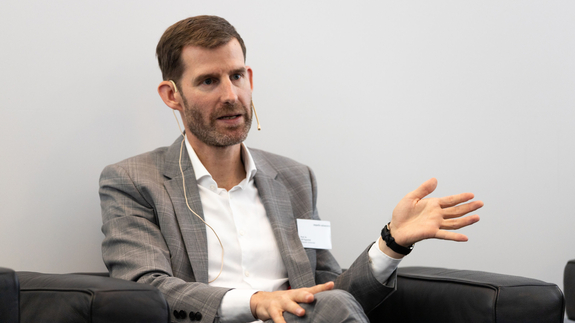
Friedrichshafen. What is earned in management and board positions in public companies often remains hidden. Just 20.3 percent of top management members at municipal level disclose their remuneration on a personal basis, compared to 47.0 percent at federal and state level. At the same time, salaries vary considerably depending on the sector and company size. This is according to the recently published Public Pay Study 2025 by Zeppelin University (ZU).
The Public Pay Study is designed as a long-term study and examines current patterns in the level, structure and disclosure of top management remuneration at public companies and highlights prospects for digital governance and sustainable remuneration structures. The study examined 10,650 top management members from 7,181 public companies in cities with a population of over 30,000, rural districts and federal and state governments. Remuneration data for 2,079 individuals from 1,148 public companies was identified.
Among the municipalities with at least five public companies, seven municipalities have a personal disclosure rate of 100 percent for the 2023 financial year. For a further five municipalities, the figure is at least 75%, and for 32 municipalities between 50% and 75%. In contrast, a considerable 242 municipalities still have a remuneration disclosure rate of 0%. At federal and state level, the disclosure rate is 47.0%. At 98.6%, the public broadcasters already achieve almost complete remuneration transparency.
There are also clear differences in the level of remuneration paid to top management members of public companies. The study shows that 39.7% of top management members receive remuneration of less than 150,000 euros. While 43.3 percent receive between 150,000 and 300,000 euros, 13.4 percent receive more than 300,000 euros and 3.6 percent over 500,000 euros. Remuneration is lower than in the previous year for 22.9% of top management members and constant or higher for 77.1%. For top management members in the high remuneration range, the increase of 2.3% was significantly higher than for those in the lower remuneration range.
"Transparency laws and public corporate governance codes should be used to achieve complete remuneration transparency everywhere, including pensions and a peer group for remuneration levels. Fair pay and no envy debates are needed across the board," explains Professor Dr. Ulf Papenfuß, holder of the Chair of Public Management & Public Policy at ZU.
The "Public Pay Study 2025: Top Management Remuneration in Public Companies - Perspectives for Digital Governance and Sustainable Remuneration Structures" was produced in collaboration with LAB & Company Düsseldorf GmbH, which supported the discussion of the topic in practice.
The complete study is available for download at puma.zu.de