Prof Koschut at student initiatives
Lecture series "Use your Vote" on the European elections - "Emotions in EU migration policy
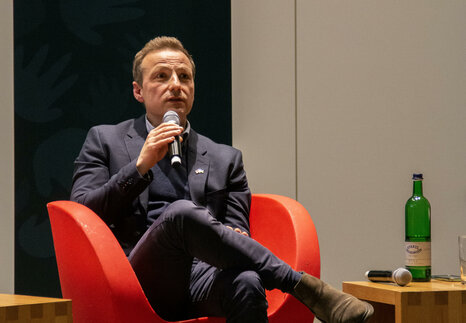
On 7 March 2024, Simon Koschut took part in the EU lecture series "Use your Vote" to talk about emotions in EU migration policy. The lecture series is organised by the Young European Federalists and takes place every week, alternating between Zeppelin University and the Volkshochschule Friedrichshafen.
Simon Koschut spoke primarily about the EU as a social group and how it can experience emotions as such. He also discussed how emotions mobilise political protest, but also the difficulty of proving emotions empirically.
The lecture was recorded and can still be heard here as a podcast.

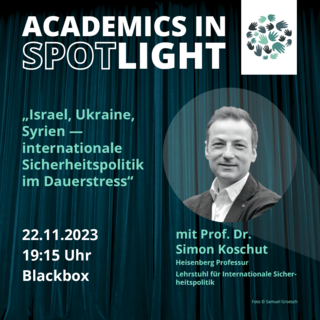
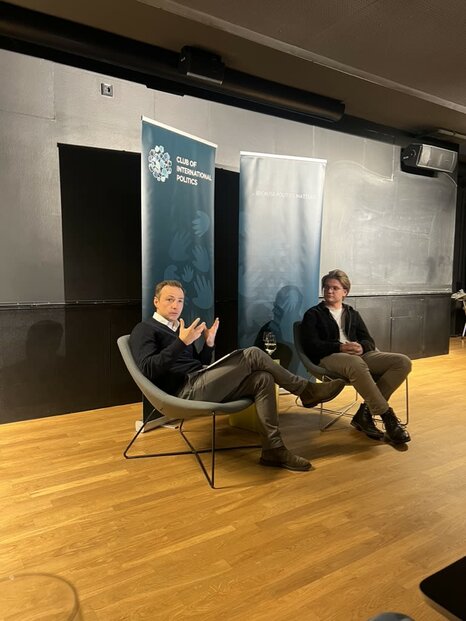
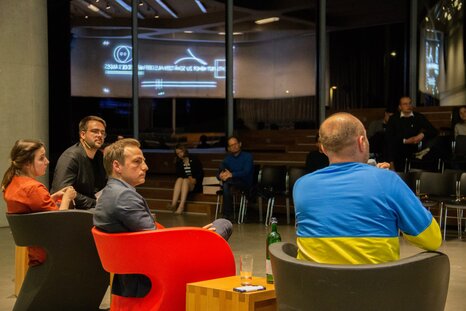
Club of International Politics - Academics in Spotlight: "Israel, Ukraine, Syria - International security policy under constant stress"
Prof Koschut shed light on the complex challenges of international security policy, from ongoing tensions in the Middle East to geostrategic dynamics in Eastern Europe. In addition to the local level, current conflicts were analysed against the backdrop of a changing global security order. Particular attention was paid to current events in Israel, Ukraine and Syria.
The discussion and Q&A sessions with the students then began over a glass of wine.
The Club of International Politics is a registered association and student initiative of Zeppelin University. Regular events are organised to discuss current topics with politicians, diplomats and experts in international politics.
Past guests have included Christian Lindner, Claudia Roth, Jens Spahn and Ambassador Katharina Stasch.
Club of International Politics - Theme evening on the war in Ukraine
In April 2023, Prof Koschut was a guest at another event organised by the Club of International Politics in cooperation with the German Atlantic Society (DAG).
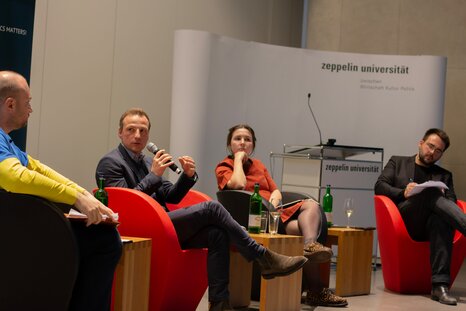
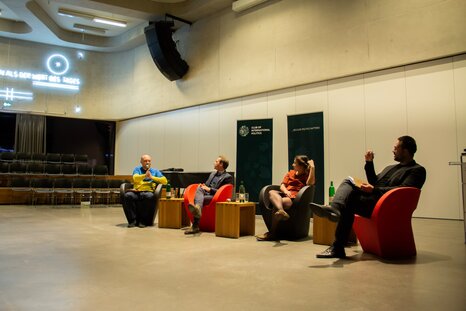
At the themed evening on the war in Ukraine, a few months after Russia's attack on Ukraine, an attempt was made to examine different perspectives on the war. After a military-strategic classification by Colonel Markus Reisner, Prof Koschut took part in the panel discussion on "War & Memes: Ukrainian Crisis Communication".
Together with the Ukrainian journalist and activist Andrey Buzarov and the Ukrainian policy advisor from the Bundestag Maria Vladymyrova, Prof Koschut was able to provide insights into the emotions in Ukrainian crisis communication. The focus was on the high and rapid presence in social media as well as the versatile nature of Selensky's communication and demeanour.
Other articles
 07/24/2026
New Publication in the Journal of Organizational Behavior
The article "Rewarded to Reject? Exploring Motivational Roots of Idea Rejection in Teams" has been accepted for publication in the Journal of Organizational Behavior. 06/09/2026
New publication in Policy Studies Journal
Stefanie Rueß shows in the Policy Studies Journal that regional migration coverage influences job center decisions and welfare sanction rates. 05/10/2026
Europe Day with Armin Laschet, MdB, and Prof. Dr. Steffen Hurka
At the ceremonial event marking Europe Day at the Friedrichshafen Music School, presentations were given, among others, by Armin Laschet, Member of the Bundestag, and Prof. Dr. Steffen Hurka. 03/28/2026
Academy of Management Annual Meeting 2026
The ZEPPELIN-Chair for Innovation Management and Transformation is delighted to present results of its research activities at this year's Annual Meeting of the Academy of Management in Copenhagen. Two research reports will be presented at ...