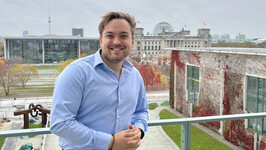
"A bit like a fresher's week" - how ZU alumnus Johannes Volkmann experienced his start as a member of the Bundestag
Johannes Volkmann completed his Bachelor's degree at ZU. He has been a member of the Bundestag for a year now. We wanted to know what a successful start there looks like.
Mr. Volkmann, in February 2025, you were elected to the Bundestag for the first time in the Lahn-Dill constituency. When you look back on this year now, what was it like for you?
Johannes Volkmann: My start in the Bundestag was different than expected. Even before the newly elected Bundestag had convened for the first time, the vote on the special fund was due. As newly elected MPs, we were not yet able to take part in the vote, but we were able to take part in the debates in the parliamentary group.
We also faced the challenge of not having our own offices for the first eight weeks. The old offices only became available on the last day of the old parliament's term, and new ones had to be allocated first. My team was already in place, but we were constantly moving back and forth between different conference rooms. Of course, you couldn't leave any documents lying around, you had to move every day - that made the beginning a bit logistically jerky.
But what helped me enormously was the positive atmosphere among my colleagues. Almost a third of our group was newly elected and we supported each other in the first few weeks, gave each other tips and made it easier for us to get started. This togetherness took a lot of pressure off and made my start much easier.
What's it like on your first day in the Bundestag? Do you arrive in the morning, ring the bell and say: "Hello, I'm here now, where should I go?" Or is there some kind of introductory event?
Johannes Volkmann: Yes, exactly. You introduce yourself at the gate and get your MP card at a welcome table. There is a whole series of introductory events, such as from the Bundestag IT department and various specialist services. My parliamentary group also organized a kind of boot camp in the first few days. All the newcomers were brought together there and we went through the most important topics together - from the question of how I suddenly become an employer and take on personnel responsibility to very practical things: How do I borrow a book from the parliamentary library? Basically, it all feels a bit like a freshers' week at university.
Was there anything in the Bundestag that you didn't know from your previous political career, or were you familiar with everything from the outset?
Johannes Volkmann: I was already familiar with the MEPs' offices in the European Parliament from my time working there. In this respect, I was basically familiar with everyday parliamentary life, even if many things are different in practice, of course. The Bundestag is much more characterized by the dynamic between government and opposition than the European Parliament, where there are no fixed majorities.
All in all, I would say that there is little that is really surprising - but there is a lot that you only become aware of when you are actually there. For example, the media attention that suddenly becomes a very present part of your everyday life.
Did you then have to think straight away about which committees you wanted to join, which groups or networks you wanted to get involved in? Or was that already clear beforehand?
Johannes Volkmann: At the beginning, you submit a kind of wish list with your committee preferences. The regional group chairmen - in my case the Hessian one - then negotiate among themselves who gets which places. This process is also referred to internally as the "carpetbagger's round", because different options are constantly being exchanged.
The Foreign Affairs Committee is definitely one of the most sought-after committees, so it is a great privilege to be able to participate in it in my first term. I have also taken a seat on the Development Committee. The Budget Committee is particularly popular because this is where decisions are made on the use of funds from the federal budget. Overall, I am very satisfied, especially because foreign and security policy with regard to China and East Asia corresponds exactly to my interests.
Did you set your own goals for your term of office in advance or do you have to subordinate them a little, depending on which committees you end up on?
Johannes Volkmann: On the one hand, I naturally have specialist policy goals, which depend heavily on which committees I am on. A key concern is to reduce the risks in our supply chains vis-à-vis China and to reduce dependencies - for example with regard to critical raw materials. It is precisely in this policy area that I can now make a concrete contribution, as we agreed in the coalition agreement under the keyword "de-risking".
At the same time, there are constituency issues that are just as important for my work. For us locally, it's primarily about transport policy issues: the expansion of the A45 and B49, the renovation of railroad lines and better connections to long-distance transport. These are issues that directly affect people here. And you don't necessarily have to be a member of the transport committee to get involved, you have to be in contact with colleagues, ministries and infrastructure companies.
What was it like for you to speak in a plenary session for the first time? Of course, it wasn't your very first time at a microphone, but perhaps it was something new?
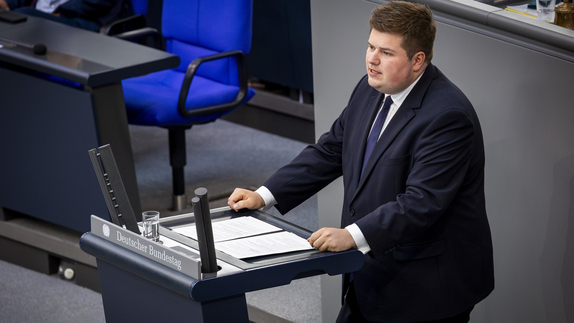
Johannes Volkmann : It can't be compared to any other lectern in Germany, because the plenary chamber is simply a very special place. When I sat there for the first time and looked up at the Bundestag eagle, it was a very moving moment. After all, you're not sitting there for yourself - I get to represent 280,000 people in my constituency, the majority of whom have entrusted me with their vote, and that's an enormous responsibility. And even if you're not in the spotlight every day, there are those little moments when I sit in the plenary chamber, look up and feel that this place has something special every time.
My first speech was about a foreign deployment of the Bundeswehr, specifically the renewed mandate for the Kosovo mission. Although there is currently no specific threat there, the decision to send soldiers on an armed mission abroad is not taken lightly.
So it's less about the ability to speak and more about the self-perception of importance?
Johannes Volkmann: For me, it is a great honor to be able to speak in the plenary chamber. It's not a microphone like any other. From my previous job as a speechwriter, I have taken with me the aspiration to always formulate my speeches in the Bundestag personally. It is important to me that what I say in the plenary is authentic and expresses my convictions.
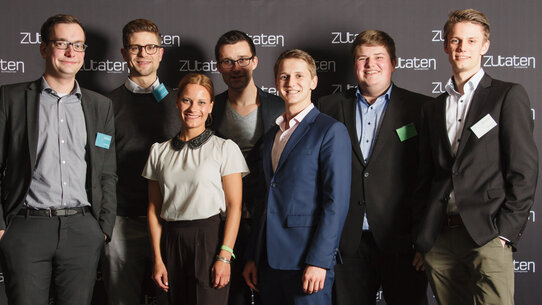
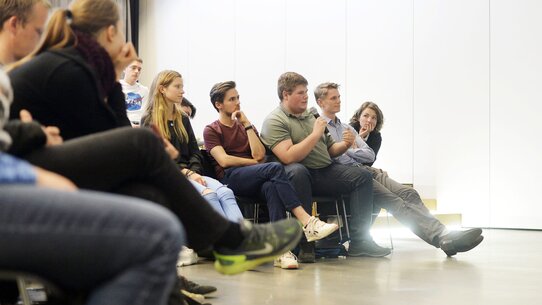
Now you come from Zeppelin University, where student participation is a way of life. What is more strenuous: being a student senator at ZU or a parliamentarian in the Bundestag?
Johannes Volkmann: I would say that it depends on your mood. Being a member of the Bundestag brings with it a great privilege: as a directly elected member of parliament, you have a high degree of personal freedom, both legally and practically. At the same time, I am part of a parliamentary group and involved in its decision-making processes - I was not elected as an individual, but as a representative of the CDU. Joint decision-making is very important for effectively forming a majority in the government.
In many ways, it reminds me of my time as a student senator: you are the point of contact for the interests of the people you represent. In my constituency office, we receive emails from citizens every day, often with very difficult personal situations - from Germans in prison abroad to people who have important individual concerns. You can't help everyone directly, but you can often provide useful contacts, give information or speed up results with practical advice.
It used to be similar in the ZU review committee: You sometimes act as an advocate for those who trust you with important concerns. And this basic pattern still characterizes my work today.
Would you see your time in office as a student senator as the start of your political career?
Johannes Volkmann : Student representation, university politics, later local politics - for me, these were really all steps on the way to taking responsibility for others. And this path ultimately led me to the German Bundestag.
Working in committees in particular taught me a lot of things that are still crucial today: building a consensus, developing proposals together and being able to convince or be convinced in discussions. You don't learn these more technical aspects in a seminar, but only through practical work - and as a newcomer to the Bundestag, you also learn something new every week of a session.
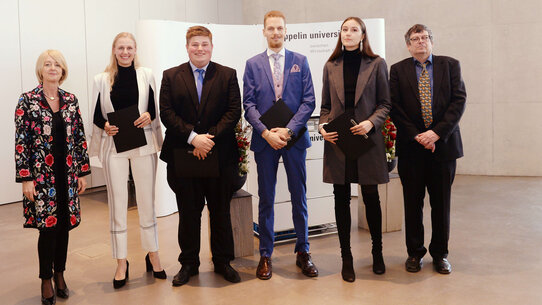
If you could give one piece of advice to current political science students who are interested in a career in politics. What would it be?
Johannes Volkmann: There is no universal recipe, but I believe that you shouldn't start politics as a career project, but out of an inner conviction that you want to change something. This can start at a local level or at a larger one - the crucial thing is to start at all. In my opinion, the most promising way is to commit to a political party, get involved in it, stand as a candidate for municipal or district councils and convince people with good, fact-oriented work.
It is also important to join political parties and youth organizations! Our democracy thrives on participation, and it worries me that the parties are becoming increasingly outdated and fewer people want to get involved in the long term. But politics needs precisely this commitment - even if there is a headwind.
And you shouldn't be put off if you don't like things. On the contrary, this should be an incentive to push for change.
Thank you very much for the interview, Mr. Volkmann, and good luck for the future.
More articles
 09/30/2026PeoplePioneer of the Month
Ferhat Cicek: With Foresight into the Wide World
With an inquisitive nature and an extensive network, Ferhat Cicek set out from Lake Constance into the wider world—to Singapore, Doha, Istanbul, New York, and Washington, D.C. 08/26/2026PeoplePioneer of the month
Hannah Hartenstein: In Tune with a Culture of Empowerment
For years, Hannah Hartenstein worked behind the counter at the student café “Beton & Bohne”. At the same time, a unique interest began to take shape: an interest in the economic side of the healthcare system. 07/15/2026PeoplePioneer of the month
Leon Löchle: Life in a Highly Frequented Area
For Leon Löchle, getting involved is as much a part of life as the air he breathes. It means a great deal to him to stand up for others or to help them have a good time.- 06/18/2026PeoplePioneer of the month
Julia Sonntag: Always One Step Ahead of Stagnation
Julia Sonntag is what people generally call a loyal soul. She feels a deep connection not only to the Lake Constance region, but also to the initiatives and jobs she’s involved in.