What happens to the special infrastructure assets?
In the end, it's just money. What Robert Habeck formulated at the time as the quintessence of his economic policy expertise seems to be the motto of the future coalition of CDU/CSU and SPD. With the exemption rule for defense spending from the debt brake now enshrined in the Basic Law and a special fund for infrastructure of 500 billion euros over twelve years, the government has issued itself blank cheques for the next legislative period while it waits. What will be left of this for transport infrastructure? asks ZU professor and transport expert Alexander Eisenkopf.
The new debt pot - a cauldron of colors
Even in the negotiators' exploratory paper, transport infrastructure was only one of numerous items. The new debt pot was to be used "in particular for civil protection and civil defence, transport infrastructure, hospital investments, investments in energy infrastructure, education, care and science infrastructure, research and development as well as digitalization". In addition, an amount of 100 billion euros of the planned 500 billion euros was to go to the federal states and local authorities.
However, there was and is no prioritization approach in the infrastructure package, nor is there a clear concept of what can be considered an investment measure at all. Whatever it takes" inevitably becomes "anything goes". In particular, the coalition partners lack the insight to first examine the current budget for consolidation potential before breaking the budget constraint. However, this creates the illusion of a "free lunch" for citizens: with this plan, their country will be put back in order or made ready for defense without them having to feel additional burdens due to cuts in subsidies and social benefits or higher taxes.
However, as part of the compromise with the Greens, the average annual total volume of the special fund was reduced from 50 to 42 billion euros. In addition, 20 percent of the estimated sum, a further 100 billion euros in total, will go to the climate and transformation fund. And a climate proviso (climate neutrality by 2045) has been added, the effects of which are currently unforeseeable. However, there is now the criterion of additionality for the measures of the special fund introduced by the Greens, although it is not conclusively clear whether the regulation found really protects against a budgetary policy shifting station.
The money is there
Even if the special infrastructure fund fundamentally represents a fatal political decision in terms of economic and financial policy, it is still there. It is therefore particularly important to think about its sensible use. Transport infrastructure should be a focus of spending. For years, there have been complaints and discussions in Germany about a transport infrastructure that is inadequate and in some cases dilapidated. After decades of discussion, we no longer have a problem of knowledge in this respect, but only a problem of implementation, which first and foremost concerns financing, but then also the strategic and operational conditions for implementation.
The special infrastructure fund or "infrastructure and climate neutrality", as it should now be apostrophized, could give Germany a jolt. Federal investment in transport infrastructure could finally be raised to a level that is sufficient to maintain the substance and adapt capacities to the needs of a growing economy. In addition to the Keynesian demand stimulus in the construction phase, which will come from such a massive fiscal package but will of course remain a flash in the pan, the upgrading of transport routes will have important long-term growth and productivity effects. Freight transportation will become more efficient and reliable, traffic jams on the freeways will be reduced and the expected improvements in long-distance passenger rail transport, for example, will reduce travel resistance and facilitate economic exchange. If our economy wants to grow again, which it must because of the foreseeable challenges facing social systems and the costs of a transformation motivated by climate policy, it urgently needs intact roads and functioning rail, air and inland waterway transport.
As a conservative estimate, the special fund is expected to generate additional federal investment in transport infrastructure of around €10 billion per year over a decade. According to the Annual Economic Report 2025, the federal government invested 26.4 billion euros in transport infrastructure last year. Of this, 16.3 billion euros was invested in rail, 8.5 billion euros in road and 1.4 billion euros in waterways. In the previous year, the figure was 9.2 billion euros for rail and 8.9 billion euros for federal trunk roads. A large part of the high level of investment in the railways is due to the increase in equity at Deutsche Bahn AG, which was undertaken because direct financing of measures by means of the previously customary construction cost subsidies from the federal government would have jeopardized compliance with the debt brake. This should soon be history when the money flows from the special fund.
The rail and climate lobbies in particular are reporting needs
Based on the average of recent years, we are therefore talking about a realistically possible increase in investment of 40 to 50 percent as a "house number". If the current investment level of 26 billion euros in the regular budget remains the same - a rather optimistic scenario - a total of 450 billion euros could be invested in transport infrastructure over the next twelve years. This is a gigantic sum and should be sufficient at first glance, even if you look at the needs articulated to date. Deutsche Bahn AG, for example, has already stated an additional requirement of 150 billion euros; for roads, an investment volume of 188 billion euros over the next ten years is being discussed. However, it is primarily the rail and climate lobby that is currently crying out for fresh money, while comparatively little is heard from the road-related associations. Only inland shipping, the "forgotten mode of transport", will have to make do with a few billion.
There is a risk of massive price increases...
First of all, the money would no longer be a restriction for the urgently needed maintenance and expansion of the infrastructure. However, there is a risk that a large proportion of the additional money available will be wasted due to price increases. Debt-driven demand is coming up against an economy with a chronic shortage of skilled workers that is set to increase in the future. If we take a closer look, we can see that, despite the considerable increase in funding in recent years, investment in transport infrastructure is roughly at the same level in real terms as in West Germany in the late 1980s, mainly due to a steady rise in construction prices. This has recently intensified considerably: according to official statistics, road construction prices rose by 35% between 2021 and the 4th quarter of 2024 alone. Prices for Deutsche Bahn's rail projects have probably simply doubled since 2019. Anyone who invests such large sums in transport infrastructure as the next German government should not be surprised by drastic price increases in view of the fact that capacities in transport infrastructure construction cannot be easily expanded in the short term.
...with a lack of planning capacity
The lack of planning capacity and overburdened procurement institutions also pose a threat. In any case, the ramp-up of funds will not be able to be spent and actually implemented in construction measures before 2026/27. The shortage of qualified planners and engineers affects all modes of transport, authorities and construction companies at the same time. Although there are promising approaches to simplifying and digitalizing processes, the public administration is struggling to implement the corresponding reforms and align its processes with efficiency. This also applies to Autobahn GmbH, which was founded a few years ago with considerable advance praise, and, in view of the exorbitant price increases, to Deutsche Bahn and its subsidiary InfraGO in particular. In both cases, they are trying to reinvent themselves, which is not a good prerequisite for managing and building such sums efficiently.
Bureaucratic infarction in planning and approval procedures
Added to this are the overly complex and lengthy planning and approval procedures, which make quick and cost-effective solutions impossible in the face of resistance from those affected and protests from relevant interest groups and so-called "activists". It is true that the old Bundestag already passed bureaucracy reduction and planning acceleration laws. However, the motto of the project that transport infrastructure is "in the overriding public interest" has probably not yet been accepted everywhere. In the coalition agreement, reforms such as a uniform procedural law for all infrastructure projects, the introduction of a cut-off date regulation (subsequent changes to the legal framework no longer have to be taken into account), changes to the right to sue associations and the abolition of the planning approval procedure for replacement new builds were agreed. However, it is questionable whether all of this will be implemented quickly and then help the sluggish planning and approval system.
Where is the strategic investment planning?
Beyond these obstacles, however, there is currently also a lack of a strategic plan from the federal government for the use of funds. Although the Federal Minister of Transport presented the report on the review of the requirements plans (BPÜ) for the rail, road and waterway modes of transport in December 2024, its preparation and in particular the traffic forecasts on which it was based were highly controversial. The rail and climate lobby in particular questioned the expected future traffic growth on the roads and emphasized the supposed contradiction between higher traffic volumes and Germany's climate protection goals. Their propagandistically exaggerated position boils down to the fact that, due to the intended climate neutrality in 2045, no more new federal trunk roads may actually be built and only maintenance at a low level can take place. The funds freed up by this should be invested primarily in the railways.
In all of this, there is still no idea of how the requirements for increased "war capability", which is the aim of the debt brake on defence spending, will affect the prioritization and dimensioning of infrastructure measures. After 1991, considerations about the transport capacities and supply lines required for armed forces in Europe have largely been forgotten.
Climate neutrality caveat could lead to investment slippage
The Green Party's amendment to the Basic Law to include the proviso of climate neutrality will certainly reignite the debate on the prioritization of rail or road in terms of expansion and new construction in a much more controversial manner. However, a future German government would be well advised not to give in to calls for a moratorium on new road construction and to remain on course and keep an eye on the needs of all modes of transport according to their economic cost-benefit ratios.
Stagnation or even a reduction in investment in road construction is likely to result in a significant loss of prosperity for Germany. Instead, the funds should be prioritized for maintenance and replacement measures, particularly on bridges, as well as the necessary expansion of congested long-distance transport routes. In particular, the infrastructure package must not result in a new bypass program to satisfy constituency interests. However, this was already the tenor of the Federal Transport Infrastructure Plan 2030 from 2016, which is still valid today.
Road transport generates necessary investment funds itself
In addition, road transport generates the budget funds currently required for investments itself. It is worth remembering the 13 billion euros in revenue from the truck toll in 2024 and over 30 billion euros in revenue from the mineral oil tax for fossil fuels. In the future, however, a car toll could also be discussed as a supplementary source of revenue. In the course of the drive and energy transition and the politically planned switch to electromobility for freight and passenger transport, the road will also become just as climate-friendly as rail - unless the energy transition is expected to fail. From 2027, the new ETS2 emissions trading scheme will also apply to road transport. There will then no longer be any climate-economic justification for focusing on rail infrastructure.
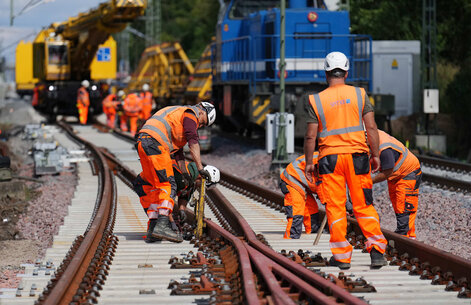
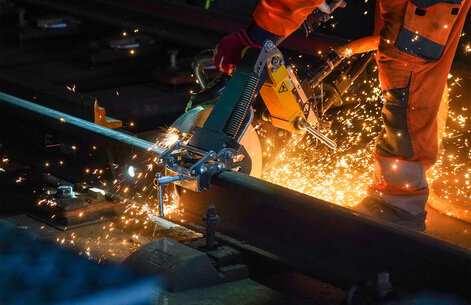
In rail transport, the investment focus is currently on the megaproject of so-called corridor renovations and digitalization. By 2030, 4,000 kilometers of track on 41 corridors are to be completely renovated at a cost of over 30 billion euros. The special feature of this project is that instead of frequent, short-term closures during ongoing operations, heavily used sections of track will be completely closed for several months. This allows all the necessary work to be carried out in a bundled manner.
Following the completion of the pilot project on the so-called Riedbahn, however, more and more voices are questioning the procedure and the cost development of the corridor renovation. The latter has already led to the withdrawal of performance commitments, for example regarding passing tracks for freight traffic, on the Hamburg-Berlin corridor, which is due to be completed this fall.
Before releasing tens of billions of euros for the coming years, a new federal government should therefore first evaluate whether such corridor renovations actually make rail traffic more reliable in the long term and whether a less invasive approach would not have led to the same result.
When allocating funds between rail and road, politicians should also be aware of the efficiency advantages of road infrastructure over rail. For every euro of annual investment, federal trunk roads enable approximately four times as much passenger and freight traffic. Against this background, planned economic ideas of a comprehensive shift of freight and passenger traffic from road to rail are in any case economically inferior.
Additional course setting required
Further reforms are also required to make the transport infrastructure investment offensive a success. For example, politicians should reform the structures for the provision of funds in order to ensure that funding is available for all modes of transport over the course of a year. This calls for either long-term, rolling financing plans or fund solutions. The primary aim here is to ensure reliable coordination of project planning and financing. The strategic (long-term) and operational perspective of infrastructure development must be coordinated between politicians and InfraGO (not the Deutsche Bahn Group Executive Board) or Autobahn GmbH and must be incorporated into the investment and financing planning of the infrastructure companies and monitored accordingly.
It should also be highly relevant to stimulate competition on the procurement markets for infrastructure investments. Incentives for a greater market presence of foreign construction and infrastructure companies should also be created here. Last but not least, it should be borne in mind that transport infrastructure construction is generally a very energy and CO2-intensive activity. In addition to the shortage of personnel, rising charges due to the corresponding levies will also contribute to the expected cost increases.
In the end, the hope remains that the planned special fund will really ensure additional and economically productive investment in transport infrastructure and that this will be accompanied by a radical general reform approach in economic policy. This is the only way to avoid crowding out and the threat of inflation as a result of the credit-financed fiscal programs. However, in order to stimulate the supply side of the economy, fundamental economic reforms are required, for example in the labor market, social security and taxes. In particular, the reform backlog in the infrastructure sector and its institutions needs to be reduced. The large amount of additional money is therefore a necessary, but not yet a sufficient condition for success. Before that, the gods have placed sweat and, especially for politicians, the drilling of thick boards.
More articles
 03/12/2026ScienceGuest article by PD Dr. Martin R. Herbers
Kick-off without a blueprint: What the state election in Baden-Württemberg reveals about the super election year 2026
After the state elections in Baden-Württemberg, the search for the "great lesson" begins. Is it just a revealing prelude or even a blueprint? 09/21/2026ScienceThree Questions for Simon Koschut
Security. Europe. Responsibility.
How Europe's security order is changing, what role transatlantic relations play in this process, and what responsibilities academia and universities bear in a new security landscape. 07/16/2026ScienceThree Questions for Anja Achtziger
More Than Just Studying. Motivating. Making Decisions. Taking Responsibility.
Why Zeppelin University emphasizes judgment, responsibility, and interdisciplinary thinking, and why these skills are more important than ever before. 06/25/2026ScienceInternational Spring School
Conflict as a Resource for Cultural Policy
Young cultural policy makers from around the world gathered at ZU. They discussed spaces for negotiation within cultural institutions through pluriversal participation and conflict resolution.