Buses, trains and barriers: bodo boss Bernd Hasenfratz visits Zeppelin University
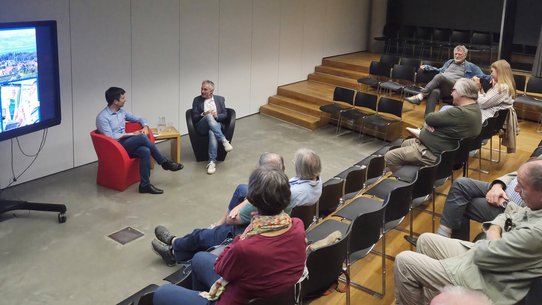
During his visit to Zeppelin University, bodo Managing Director Bernd Hasenfratz spoke about hurdles and solutions for public transport in the Lake Constance district.
An issue that many people are familiar with from everyday life, for example when commuting: The bus breaks down, arrives too early or is much too late. This is an annoyance that regularly affects not only many students, but also employees of Zeppelin University (ZU) when they are dependent on buses and trains in Friedrichshafen.
But why is that? Bernd Hasenfratz, Managing Director of the bodo transport association, explained to the audience that real-time data is particularly important in order to be able to calculate reliable arrival time forecasts. But why not simply use the data from a bus or train directly?
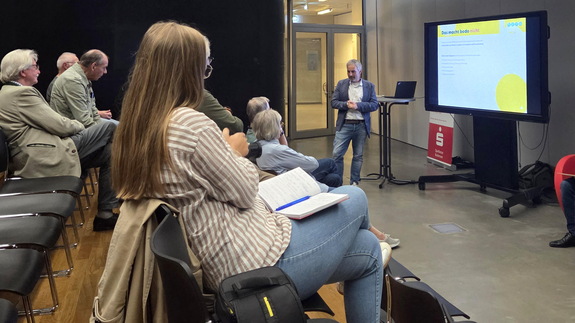
Another statement from the audience: "Real-time data has been possible in Switzerland for 10 years."
According to Hasenfratz, the problem is that pure real-time data would constantly fluctuate, making the display boards confusing. This is why calculated forecasts are needed that at least offer passengers a stable orientation - even if they are not always completely accurate.
According to Hasenfratz, reliable public transport in the Lake Constance region requires a reliable timetable
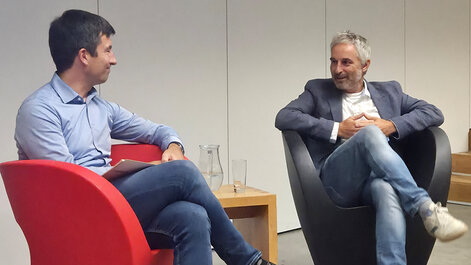
"The best way to ensure connections is to have a good timetable," explained Hasenfratz. However, such a timetable is dependent on customer complaints, which bodo would like to respond to more in future. However, this requires more feedback from passengers. This is the only way to further develop timetables on the basis of concrete data. The transport expert said: "We want to move away from customers having 20 contacts - we will look at where each complaint belongs." In order to be able to collect more data, bodo would like to break down barriers with a central contact person so that feedback can reach the provider more easily from the customer.
One older participant pointed out the generational conflict in digitalization. Even handling digital tickets is a hurdle for many older people - in addition, they have to log in several times for each process. Now a single sign-on - a one-time login that gives users access to various functions of the bodo app without having to log in multiple times - is to be introduced in future. This should make access to the bodo app easier and more convenient, as you only have to log in once for several processes.
The bodo transport association also has attractive offers for students
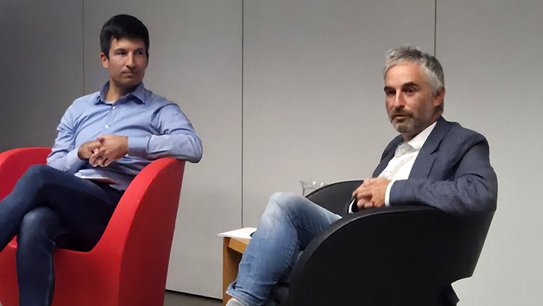
In addition to the digitalization of the app, the focus is also on the existing ticket system. The check-in/check-out system of the bodo card has one problem in particular: check-out. According to Hasenfratz, some check-outs are said to have been missed, resulting in a long-distance booking.
Ticket prices have also risen by an average of 5.2% as of 01.08.2025. An adult ticket will therefore cost 3.00 euros instead of 2.90 euros. The JugendBW ticket is intended to relieve young passengers in the face of rising prices and at the same time provide them with more comfort on local transport. "Less is more", emphasized Hasenfratz - "the key lies in the simplicity of the Deutschlandticket".
Without a check-in/check-out system, this ticket is easy to carry with you to travel on public transport throughout Germany. With the JugendBW-Ticket, the state of Baden-Württemberg offers young people under the age of 27 a particularly inexpensive alternative to the Deutschlandticket. For 39.42 euros a month, school pupils, trainees, students and volunteers can use all local public transport in the state - whether for their daily commute to school, their journey to their place of study or excursions in their free time.
The ticket is also attractive for many students at Zeppelin University, as it not only facilitates connections between Friedrichshafen and surrounding cities, but also enables spontaneous travel within Baden-Württemberg at low cost.
How do you catch fare dodgers?
According to bodo, there were isolated cases of misuse, for example when groups of people passed on Germany tickets digitally. As the checks were carried out exclusively by the bus drivers themselves, there were reportedly also disputes in which phones were taken from hands in order to check their authenticity.
In other cities, there are enforcement officers who take on the problem of fare evasion. Hasenfratz said: "The barrier to fare evasion is higher than simply getting on the bus without being checked by the bus driver." It remains to be seen which solutions will prevail in the long term - for the time being, checks by drivers will remain in place.
For ZU students, issues surrounding real-time data, timetables, digital access and affordable tickets are more than just a theoretical topic - they shape the everyday lives of those students who regularly rely on public transport. The visit by bodo Managing Director Bernd Hasenfratz to Zeppelin University showed how closely these practical challenges are linked to larger issues of mobility, sustainability and digitalization.
Whether through reliable timetables, the JugendBW ticket or new digital solutions such as single sign-on - the coming years will show whether it is possible to make local transport more reliable, simpler and more attractive for students and the region.
More articles
 10/08/2026LifeVillage Hub
Starting a business is a matter of practice
This year's Village Hub focuses on the question: If AI makes companies smaller, flatter, and faster—what skills do founders actually still need?- 09/28/2026LifePhoto Gallery
ZU Summer Festival, themed “Beyond borders.” featuring a diverse program and many guests
Zeppelin University opened its doors and invited anyone interested to meet, exchange ideas, and celebrate together.  08/17/2026LifeInvestor Summit Bodensee
Why Good Ideas Need the Right Connections
For founders seeking funding, the Investor Summit Bodensee is about much more than just a pitch on stage. After all, the most valuable connections are made afterward.- 08/03/2026LifeGlobal Talk with Andreas Kruse
How Young and Old Come Together
In a Global Talk, gerontologist Andreas Kruse explains how the generational conflict can be resolved and how society can be strengthened through interaction and collaboration.