Through the night and through the city
Between dance beats, backyards and gas pumps: For three days, SEEQUENZ brings together music, art and the people of Friedrichshafen - and it shows what happens when a festival moves not just across stages, but through an entire city.
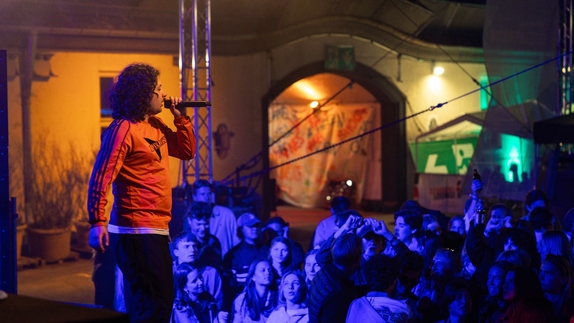
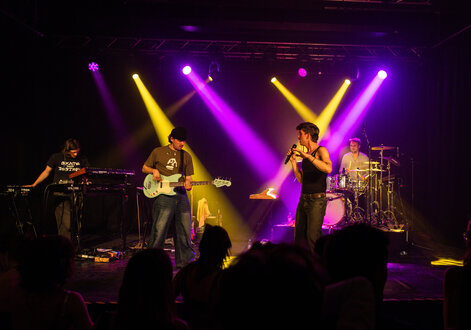
By the time SHIMMER. takes to the stage at 9.30 pm, the Kulturhaus Caserne has become a place of good humor, dancing and a relaxed atmosphere. On one of the first warm evenings of the year, students, residents of Häfler, groups of friends and visitors from the region crowd in front of the stage. Some have obviously known the band for a long time. Others simply stay because their German indie and synth pop has just the right amount of disco energy to make it hard to decide whether you want to listen first or dance straight away.
The four-piece band from Stuttgart is no stranger to long-time festival visitors. "We're happy to be here again!" the band shouts into the audience. The crowd cheers and claps. SHIMMER. is performing in Friedrichshafen for the third year in a row. But the band is also visibly a highlight of the evening for new visitors. The fact that the current student vice president Till Burberg, who co-directed the 2024 festival, is now the band's manager also tells us something central about this festival: it doesn't always end when the last stage is dismantled, all the cables are stowed away and all the lights have gone out. Sometimes it creates connections that last.
The SEEQUENZ Festival is moving in more ways than one
This year's SEEQUENZ festival is the newly interpreted continuation of Seekult x Lange Nacht der Musik from 2025. It is organized as part of a course by students at Zeppelin University - every year with a new line-up, new ideas and a new look at how culture can be created at the interface between the university and the city. This year, the festival's motto is "Horizons in motion".
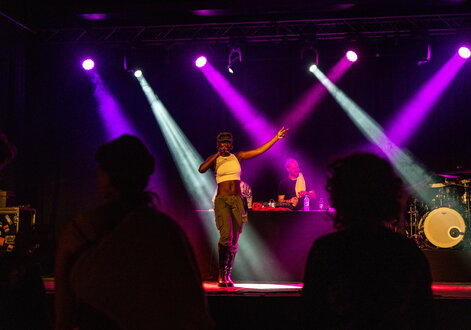
This quickly becomes apparent at the dance into May, with which the festival traditionally starts. Three stages are spread across the grounds of the Kulturhaus Caserne: outside the inner courtyard with plenty of space, stalls and food trucks, somewhat hidden away is the workshop, a small, almost living room-like space, and inside the casino with a club-like atmosphere. Anyone walking around the site that evening will not only move from performance to performance, but also from atmosphere to atmosphere.
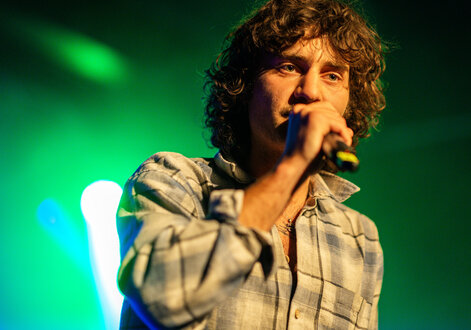
The evening also keeps moving musically. The line-up offers a wide range of musical styles and genres, which works precisely because of its variety and the different stages: Indie pop, rap, electronic beats and quieter moments are not against each other, but next to each other. Sometimes the audience stands quietly in front of the stage and listens to gentle ballads, sometimes they sing along loudly, sometimes people dance after just a few bars, even though they are probably hearing the songs for the first time.
The city center as a cultural stage
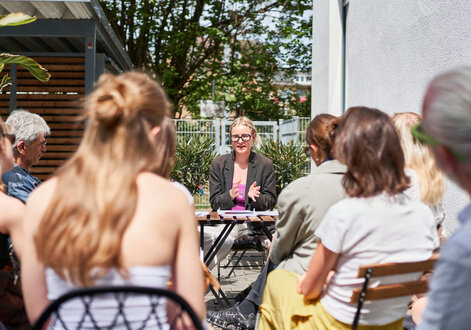
After a turbulent start, the pace of the festival is changing. On Friday, photography, performance and small cultural formats take center stage, while on Saturday, a cultural hike leads through Friedrichshafen. In the Café Loft, author Resi will read her own texts about shame - a feeling that everyone knows and yet is rarely spoken about openly. The tone is different to two days earlier in the Caserne. People listen intently, perhaps a little more cautiously than usual.
The music picks up again in a small courtyard. Radioactive Honey, a rock band from Friedrichshafen, play their songs under the warm afternoon sun. Walkers stop at the courtyard gate as guitars and drums ring out into the street. The afternoon offers visitors to the festival a new perspective on their own city - or at least a different experience of it.
The path finally leads to the exhibition "Spark" by Lena Röing Baer at the Kunstverein Friedrichshafen. The room has a simple design: Photographs relating to driving, smoking and refueling hang on the walls, with three old petrol pumps in the middle. The artist bought and refurbished them herself. What at first glance might seem like nostalgic everyday aesthetics quickly becomes an examination of familiar habits and routines in a changing world. Climate crisis, mobility, consumption - none of this is just a buzzword in the room, but is instead contained in images, objects and background music.
This year, SEEQUENZ shows how differently culture can work when it doesn't stay in one place. The festival guides its visitors through the night and through the city. Sometimes loudly, sometimes quietly, sometimes physically, sometimes mentally. Between dancing people, courtyards and quiet moments, a festival feeling is created that lives less through a single highlight than through the movement in between.
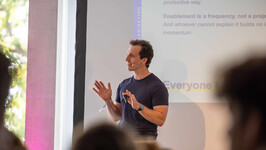
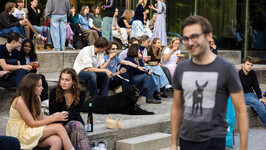
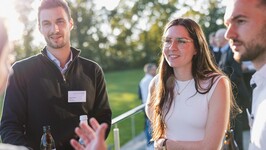
More impressions of the dance into May


Please click on the image to enlarge.
More articles
 10/08/2026LifeVillage Hub
Starting a business is a matter of practice
This year's Village Hub focuses on the question: If AI makes companies smaller, flatter, and faster—what skills do founders actually still need?- 09/28/2026LifePhoto Gallery
ZU Summer Festival, themed “Beyond borders.” featuring a diverse program and many guests
Zeppelin University opened its doors and invited anyone interested to meet, exchange ideas, and celebrate together.  08/17/2026LifeInvestor Summit Bodensee
Why Good Ideas Need the Right Connections
For founders seeking funding, the Investor Summit Bodensee is about much more than just a pitch on stage. After all, the most valuable connections are made afterward.- 08/03/2026LifeGlobal Talk with Andreas Kruse
How Young and Old Come Together
In a Global Talk, gerontologist Andreas Kruse explains how the generational conflict can be resolved and how society can be strengthened through interaction and collaboration.