More Than Just Studying. Motivating. Making Decisions. Taking Responsibility.
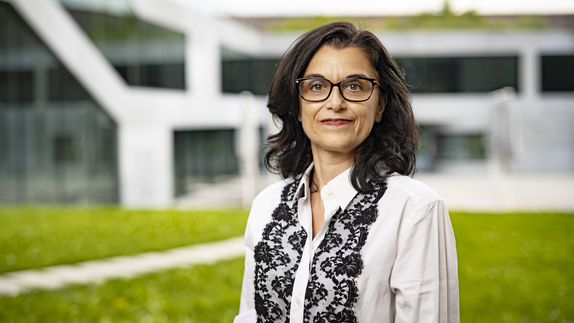
Why Zeppelin University emphasizes judgment, responsibility, and interdisciplinary thinking—and why these skills are more important than ever in a changing world: An interview with President Prof. Dr. Anja Achtziger.
Professor Achtziger, you are a social and business psychologist and now the president of Zeppelin University. How does your research relate to your vision of a university?
Professor Dr. Anja Achtziger: For many years, I’ve been interested in how people make decisions, how they pursue goals, how motivation arises, and why—in the face of uncertainty—we sometimes act very rationally, but at other times surprisingly irrationally. These very questions are not only psychologically fascinating today, but also highly relevant to society.
A university should do more than just equip young people with specialized knowledge. It should help them understand complexity, ask good questions, take on responsibility, and make well-considered decisions. This applies just as much to business as it does to politics, public administration, culture, academia, or civil society. Zeppelin University has a unique profile in this regard: it does not view business, politics, society, and technology as separate entities, but rather consciously considers them together. In my view, this is precisely where its great strength lies.
Why is studying at Zeppelin University particularly relevant right now?
Achtziger: We are living in a time when many certainties are shifting simultaneously: Digitalization and artificial intelligence are transforming the world of work, organizations, and business models; societal debates are becoming more complex; and international developments are having a direct impact on regions, companies, and individuals’ life paths.
In a world like this, it’s not enough to simply master routines. You need judgment, communication skills, analytical thinking, a sense of responsibility, and the ability to deal productively with uncertainty. These are the competencies that are particularly fostered at Zeppelin University: through interdisciplinary learning, small groups, personalized guidance, a practical focus, and a culture in which students can develop and pursue their own questions.
I believe that today’s students should not only ask, “What degree will I earn at the end of my studies?” but also, “What kind of person, decision-maker, leader, or innovator do I want to become through this program?”
What would you like to say to prospective students who are currently considering whether Zeppelin University is the right place for them?
Achtziger: Zeppelin University is particularly well-suited for people who are curious—who aren’t just looking for a label but want to understand how things fit together. For people who want to take on responsibility but also know that good decisions don’t just fall from the sky. You have to learn to prepare them, justify them, question them, and implement them together with others.
Our new and expanded degree programs in particular show where we’re headed: We combine psychological depth, management expertise, social responsibility, and digital decision-making skills. In a changing world of work, that’s a very strong profile.
My advice to prospective students would therefore be: Don’t just look for a spot in a program. Look for a place where you can grow. If you’re eager to tackle complex issues, get involved, and not just observe the future but help shape it, then it’s well worth getting to know Zeppelin University.
More articles
 09/21/2026ScienceThree Questions for Simon Koschut
Security. Europe. Responsibility.
How Europe's security order is changing, what role transatlantic relations play in this process, and what responsibilities academia and universities bear in a new security landscape. 10/14/2026ScienceThe future of multilateralism
“International organizations rarely die—they are hollowed out.”
How the international order is changing amid growing autocratic influence, and whether multilateralism still has a future: An interview with Professor Dr. Maria J. Debre.- 06/25/2026ScienceInternational Spring School
Conflict as a Resource for Cultural Policy
Young cultural policy makers from around the world gathered at ZU. They discussed spaces for negotiation within cultural institutions through pluriversal participation and conflict resolution.  03/12/2026ScienceGuest article by PD Dr. Martin R. Herbers
Kick-off without a blueprint: What the state election in Baden-Württemberg reveals about the super election year 2026
After the state elections in Baden-Württemberg, the search for the "great lesson" begins. Is it just a revealing prelude or even a blueprint?