

Gamechanger men: why equality only works with them
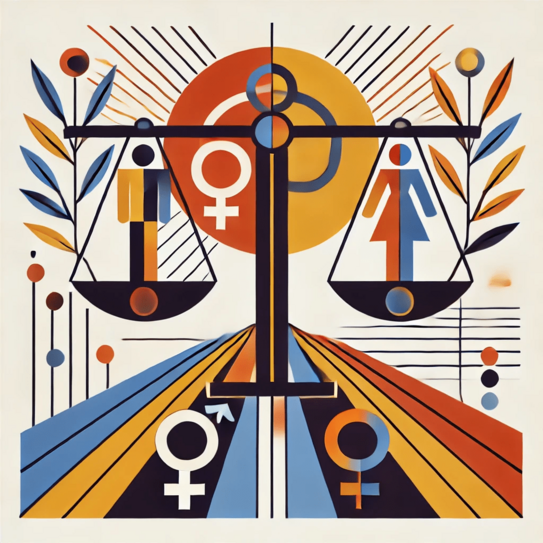
Gender inequality still pervades the labor market today - despite countless initiatives for equality. But the solution could be closer than we think: men in management positions make the decisive difference as allies - a perspective that has often been neglected in practice. So why not harness the power of these game changers to rethink gender equality from the ground up? The study "Gender Equality - The Role of Male Leaders in Transformative Corporate Culture Change" by ZU alumna Linda Suhm explores precisely this question.
"Transformative change requires the involvement of everyone. As key players, male managers have a central responsibility here," explains Linda Suhm. Together with Dr. Angelica V. Marte, she analyzes why many men are reluctant to help shape this change - and what companies can do to break through these barriers. "Only when men recognize and accept their role as necessary key players can gender equality take place," adds Marte.
Gender equality: male managers are often not included
Why do many companies fail despite their best intentions? Current research results show a clear trend: the involvement of male managers is crucial. Nevertheless, according to Suhm's research, this potential often remains untapped. The Allbright report from September 2024 shows that women are still rare on management and supervisory boards. Dr. Wiebke Ankersen and Christian Berg, Managing Directors of the Allbright Foundation, emphasize that the majority of men do not take parental leave and largely leave domestic and family work to women. This is also reflected in the current trend of tradwives, which is visible on platforms such as Instagram and confirmed by recent studies by Gallup and the Financial Times. These studies, conducted with people aged 18 to 29 in Germany, England, South Korea and the USA, highlight the ideology gap - a gap of up to 40 percent between men who represent conservative role models and women who have a liberal understanding of their role.
The positive benefits of gender equality in the workplace are impressive: studies show that practicing gender equality makes companies more profitable and more resilient. It creates an environment of psychological safety, reduces absenteeism and increases innovative strength. Gender equality is therefore much more than an ethical duty - it is a real success factor, especially at a time when Germany is caught between resignation and stagnation.
A study conducted by the Boston Consulting Group in 2017 underlines this finding: if all employees, regardless of gender, are involved in diversity measures, the success rate is 96%. However, if these efforts are limited to women only, the success rate drops drastically to 30 percent.
So why do companies still rely on women-centered measures? Suhm and Marte identify several reasons: There is often a perception that women's advancement is detrimental to men - a supposed zero-sum game that divides into winners and losers. In addition, men often struggle with inner resistance such as apathy, fear and insecurity. 74 percent of men state that apathy prevents them from getting involved in gender equality initiatives. Fear of loss of status, criticism and negative assessments by other men are further stumbling blocks. In addition, 51 percent of men feel unsure about how they could get involved in the issue due to a lack of knowledge.
Deeper, socio-psychological mechanisms are also slowing down change. The "bystander effect", "psychological standing" and the pressure to conform paralyze managers and employees alike. Many men believe they have no right to stand up for equality - and instead of taking the first step, they look on or conform to the silent majority. The result? Stagnation instead of progress. If we want to break through this collective passivity, we need courage and determination - especially from those at the top.

Suhm and Marte dispel these misconceptions. Their qualitative study shows that men do not have to fear negative consequences if they stand up for diversity and inclusion. A study by US management professor David R. Hekman, among others, even shows that while promoting diversity often has a negative impact on women's performance appraisals, men do not experience such disadvantages. An additional incentive to finally take action.
In order to support companies and male managers in the transformation, the two researchers have developed a practice-oriented model and a detailed catalog of measures. Both offer a clear roadmap for driving equality forward in a targeted manner - including an overview of the stumbling blocks that can be expected along the way. "Our model is not just theory, but a tool that shows managers how they can shape change as active allies," explains Suhm. And Marte adds: "It makes the complexity of cultural change tangible and provides concrete impetus for the future."
Gender equality not a "women's issue"
In general, five basic steps are necessary that every company can implement immediately and without great effort:
1. lay the foundation
Create a culture of openness with clear communication, flexible working models and strong support from management.
2. strengthen role models and alliances
Promote a transformation that involves everyone. A win-win approach that benefits everyone involved provides the right impetus for change.
3. get into action
Take concrete steps, launch mentoring programs and create networks that empower all genders.
4. offer support
Rely on internal and external coaches to ensure continuous support and guidance - for sustainable change.
5. involve men as active allies
Male managers play a key role. Involve them actively in planning and implementation from the outset in order to make the transformation effective and sustainable.
It turns out that gender equality is not a "women's issue" - rather, it is the basis for a sustainable corporate culture that benefits everyone. When men in management positions take on their role as active shapers, equality becomes real and companies become sustainable. Now is the time to discard old ways of thinking and take bold steps as role models, whether men in management positions or as a company as a whole - for profit, innovation and a fairer working environment. Only those who work together can create real and sustainable change.
More articles
 07/16/2026ScienceThree Questions for Anja Achtziger
More Than Just Studying. Motivating. Making Decisions. Taking Responsibility.
Why Zeppelin University emphasizes judgment, responsibility, and interdisciplinary thinking, and why these skills are more important than ever before. 06/05/2025ScienceMangrove forests
Allies in the fight against climate change
Several initiatives are taking action against the deforestation of mangrove forests in the Seychelles. But how? Angelica V. Marte and Werner Zips found out. 10/24/2024ScienceVenice Biennale
A journey through contemporary African art
Does a visit to the Venice Biennale pay off? The answer from ZU guest scientist Angelica V. Marte and Werner Zips needs a call sign: And how! 09/21/2026ScienceThree Questions for Simon Koschut
Security. Europe. Responsibility.
How Europe's security order is changing, what role transatlantic relations play in this process, and what responsibilities academia and universities bear in a new security landscape.