Focus on global nutrition: ZU students on an excursion to South Africa
How can the world be fed sustainably? ZU students searched for answers in South Africa - in dialog with experts and intercultural exchange.
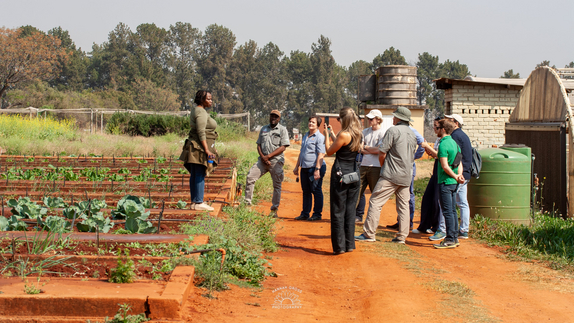
Five students from Zeppelin University, led by Professor Dr. Peer Ederer, dedicated themselves to this central question of the future. As part of the "Global Food System" seminar, they went on a week-long excursion to South Africa from August 31 to September 7 - with the aim of finding answers on the ground.
Although the Green Revolution has massively increased global food production since the middle of the 20th century, the challenge remains: Over half of the world's population is considered malnourished. This is often not due to a lack of calories, but to a lack of essential proteins and micronutrients. This apparent contradiction affects countries of all income levels and formed the starting point of the trip.
Countries in the Global South in particular are struggling with the negative consequences of this development. Seminar overview "Global Food System"
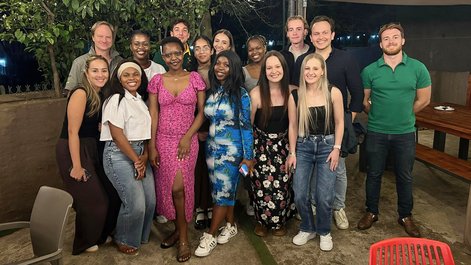
Countries in the Global South in particular are struggling with the negative consequences of this development. In South Africa, the ZU group was joined by eight students from the Animal Sciences course at the University of Pretoria. The week began with a visit to the Voortrekker Monument and an introductory lecture that offered a first insight into the country's complex history.
Discussion with contact: Students discuss with former president of the World Farmers Organization
One highlight was the discussion lasting several hours with Theo de Jager, the former president of the World Farmers Organization. The students had prepared discussion questions on the global food system in advance in mixed international teams. Key topics were debated with de Jager: the efficiency of modern agriculture, the role of family farms, the future of smallholder farmers and the crucial issue of food security. His differentiated and stimulating answers sharpened our understanding of the real challenges facing the global agricultural industry.
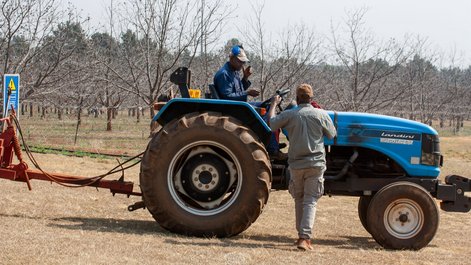
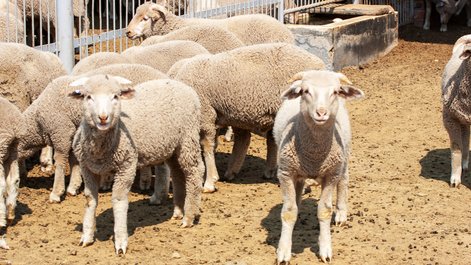
The academic program also included informative lectures on monogastric animals and their importance in agriculture, insights into cattle and sheep farming, wild animal husbandry on game farms and the presentation of the start-up Farmspace and the GOAL Sciences Institute.
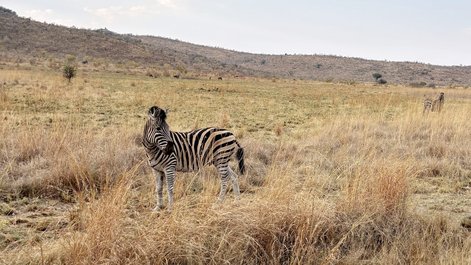
A varied supporting program rounded off the excursion: This included an impressive safari in the Pilanesberg National Parkwhere the participants were able to observe all the "Big Five" wild animal species, a traditional South African barbecue ("braai") and - as a contrast - a visit to the Apartheid Museum and a city tour of Soweto. Both impressively illustrated the cultural and historical challenges facing South Africa.
Another technical highlight was the guided tour of the Life AgriScience Campus by Professor Wayne Truter. He presented innovative research projects, such as the recultivation of mine sites with special grasses. These plants can not only filter sodium-rich water, but also serve as nutritious animal feed - a prime example of a sustainable circular economy.
The week was characterized by intensive dialogue and the constant incentive to broaden one's own horizons. The exchange within the heterogeneous German-African group and with the experts in particular enriched the perspectives of all participants.
The course is expected to be offered again in the spring semester of 2026. The number of participants is limited to ten students.
The participating students would like to thank Professor Ederer for the unforgettable impressions of this "once-in-a-lifetime" experience.
More articles
 10/08/2026LifeVillage Hub
Starting a business is a matter of practice
This year's Village Hub focuses on the question: If AI makes companies smaller, flatter, and faster—what skills do founders actually still need?- 09/28/2026LifePhoto Gallery
ZU Summer Festival, themed “Beyond borders.” featuring a diverse program and many guests
Zeppelin University opened its doors and invited anyone interested to meet, exchange ideas, and celebrate together.  08/17/2026LifeInvestor Summit Bodensee
Why Good Ideas Need the Right Connections
For founders seeking funding, the Investor Summit Bodensee is about much more than just a pitch on stage. After all, the most valuable connections are made afterward.- 08/03/2026LifeGlobal Talk with Andreas Kruse
How Young and Old Come Together
In a Global Talk, gerontologist Andreas Kruse explains how the generational conflict can be resolved and how society can be strengthened through interaction and collaboration.