UN expert Dr. Ekkehard Griep defends the role of the United Nations
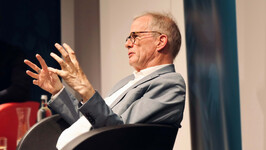
The world order is tottering, the United Nations is under criticism and the question of international cooperation is more open than ever. At the CIP Talk at Zeppelin University, Dr. Ekkehard Griep addresses the central question: Can the world still find solutions together?
While the world's attention is focused on Israel-Gaza and Ukraine, more than 300 other conflicts are almost completely out of focus. The vast majority of these are internal wars, many of them "unresolved for decades". These are conflicts such as those in Yemen or Haiti, which affect millions of people but receive hardly any political attention. In these regions, the UN is working on stability, humanitarian support and mediation: mostly quietly in the shadows of the public eye. Peace is not achieved at the conference table alone, but in a "constant process of negotiation."
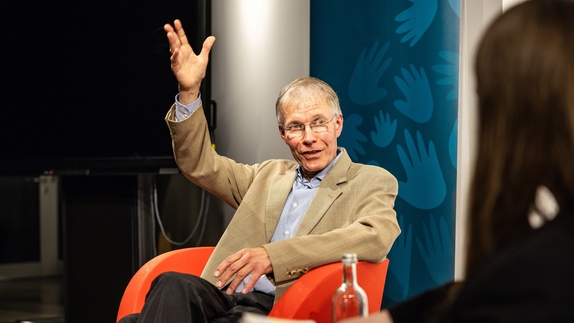
Dr. Ekkehard Griep speaks from experience and takes a clear stance: without the UN, there would be no protection for civil society in many regions of the world. He himself worked in the UN Secretariat in New York, in the Department of Peacekeeping Operations, for NATO in Brussels and for the Federal Foreign Office. His perspective on international politics is therefore shaped by countless experiences in conflict regions. But presenter and ZU student Michelle Bleichner doesn't let this attitude stand and confronts him with criticism of the UN that many in the audience have.
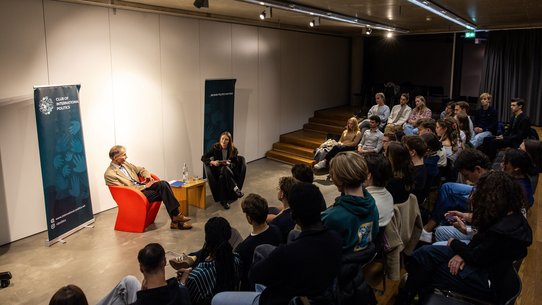
The talk provides rare insights into the practice of international peacekeeping. Griep addresses the problem that many people have an incomplete picture of the United Nations: "Most people only think of three terms: New York, Security Council, Secretary-General." But this understanding falls short, because the real work takes place outside the media world.
There are myths surrounding peacekeeping missions in particular. "A peacekeeping mission doesn't fall from the blue sky," Griep clarifies. It almost always begins with informal talks in the Security Council, lengthy consultations and negotiated mandates. CIP board member Bleichner remains focused, reflective and asks about the political limits of the UN, which do exist. "That's true, today the Security Council is often blocked," Griep admits gloomily. Rivalries between the veto powers - especially Russia, China and the USA - make decisions difficult and delay missions.
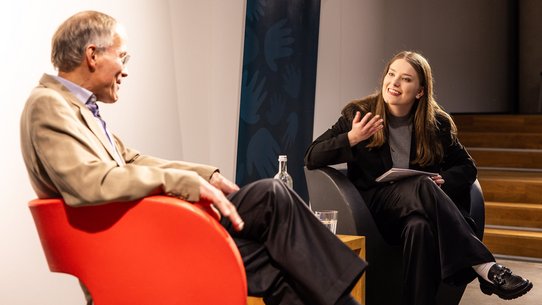
In the middle of the conversation, Griep suddenly reaches into the inside pocket of his jacket and pulls out a small light blue booklet: the UN Charter. "It's all in here," he says, leafing through to the crucial chapters 6 and 7, which define the framework for missions. Chapter 6 regulates mediation and negotiation, Chapter 7 measures to enforce peace. But Griep warns against misunderstandings: "Chapter 7 does not directly mean military!" A mission begins with sanctions and the freezing of financial flows. The three immutable basic principles of the United Nations are always applied: the consent of the parties to the conflict, impartiality and force only in self-defense. "The UN is not a combat mission," he emphasized with confidence.
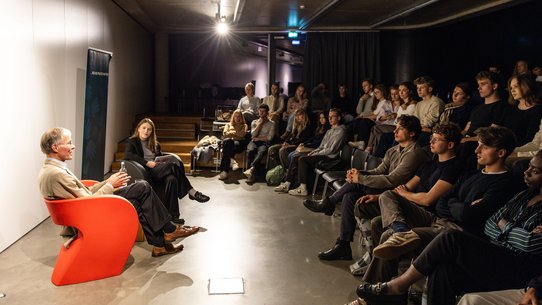
Bleichner follows up: What was the UN mission in Mali like? Unfortunately, the West African country is an example of the limits of international peace efforts. The UN had been deployed there with MINUSMA since 2013. But Griep explains what went wrong: the country was promised a lot, but some of it could not be realized. When the government finally ended the mission, the UN withdrew because "if the country itself says that it no longer wants the mission, the United Nations leaves immediately." So the mission did not fail due to military strength, but due to a lack of political acceptance.
The UN expert proudly demonstrates that peace missions can also be successful using the example of Colombia. After more than 50 years of war between the government and the FARC guerrillas, a peace agreement was reached in 2016. "One country alone cannot achieve something like this," says Griep. With 700 helpers, the UN set up weapons collection points throughout the country, monitored disarmament and built trust between former fighters and the population. Colombia shows what is possible when political will and international support come together. The mission shows what the UN is capable of.
Today, the United Nations is facing a test. A financial crisis is jeopardizing missions worldwide, as some countries - including the USA and China - are paying their contributions late or not at all. This is weakening numerous programs, including UNRWA in Gaza and 20 organizations in Ukraine. At the same time, alternative locations are being discussed, as the cost of living in New York is too high. UN Women is already working from Bonn: a sign of how serious the future of the UN really is.
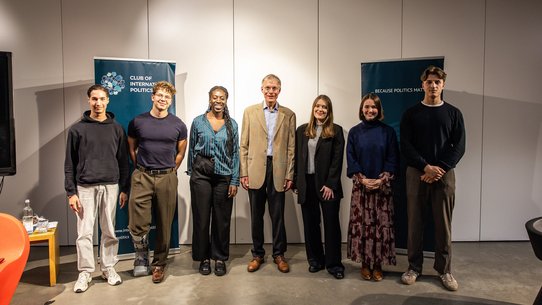
At the end, Griep formulates a thoughtful conclusion: "These are difficult times for multilateralism. Power politics has become a new currency. This makes it difficult for an organization that relies on cooperation." However, he is also encouraging and points out that many heads of government - including Trump - used the UN stage at the end of September to make their political appeals. This commitment shows that there is still a common denominator. Moderator Bleichner smiles and agrees.
Dr. Griep concludes the evening confidently with an appeal that is less defensive than motivating: "There is so much potential in the UN system." We just have to work together to realize it.
More articles
 10/08/2026LifeVillage Hub
Starting a business is a matter of practice
This year's Village Hub focuses on the question: If AI makes companies smaller, flatter, and faster—what skills do founders actually still need?- 09/28/2026LifePhoto Gallery
ZU Summer Festival, themed “Beyond borders.” featuring a diverse program and many guests
Zeppelin University opened its doors and invited anyone interested to meet, exchange ideas, and celebrate together.  08/17/2026LifeInvestor Summit Bodensee
Why Good Ideas Need the Right Connections
For founders seeking funding, the Investor Summit Bodensee is about much more than just a pitch on stage. After all, the most valuable connections are made afterward.- 08/03/2026LifeGlobal Talk with Andreas Kruse
How Young and Old Come Together
In a Global Talk, gerontologist Andreas Kruse explains how the generational conflict can be resolved and how society can be strengthened through interaction and collaboration.