Global cooperation under pressure: International voices set new priorities for future cooperation
Hanoi, Pretoria, Bucharest. At the Transcultural Leadership Summit 2025, voices from all over the world come together: oppressed by extreme weather, social tensions and democratic crises. The conference will show what challenges we share and how new opportunities for cooperation are emerging.
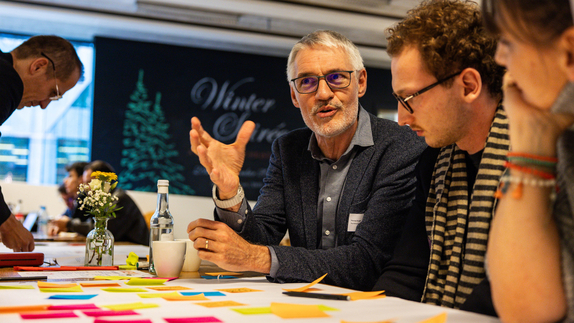
"Look here, I'll show you something," says workshop leader Jenny Theolin, who is leading the first round of discussions at the World Café, and raises a large red cube in the air. Each side represents one of the topic tables at which the participants discuss digital business models, ethics, personal transformation or sustainable societies. On this afternoon, the Zeppelin University canteen feels like a favorite café: warm cups of coffee in your hands and cozy conversations about the big questions of our time.
Theolin swings the cube through the air, and suddenly it crumbles into lots of little cubes. Abracadabra. The audience laughs in surprise, curious looks go around the room. "This is what it looks like when a single topic becomes many perspectives," she explains. The small cubes represent thoughts, questions and ideas that arise on this day. Her magic trick and the speakers who take the floor during the course of the day make it clear that diversity is not chaos, but an asset - and how much we should appreciate this.
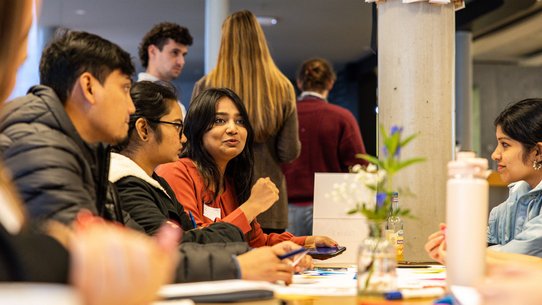
Global voices and the realization that we are strong together
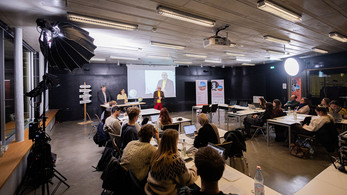
"Let us know where you are watching us from," says moderator Dr. Tobias Grünfelder, Professor at the ISM University of Management and Economics in Vilnius, into the camera. Standing next to him is Prof. Dr. Julika Baumann Montecinos from Furtwangen University, who is leading the day together with him. In front of them is a television crew that connects Zeppelin University with the world. Seconds later, greetings from Istanbul to São Paulo appear in the chat.
The Transcultural Leadership Summit is a one-day, English-language event at ZU that has been held every November at the Fallenbrunnen Campus for ten years: this year with over 200 guests, virtually and on site. The day before, students and external guests prepare the central topics in workshops and discussion rounds.
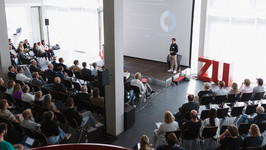
Once again this year, a special atmosphere is created in the Graf-von-Soden-Forum: people who would otherwise never have met listen to each other. They describe how difficult their world feels right now: extreme weather in Vietnam, chemical pollution in Lithuania, political tensions in South Africa. These voices not only describe problems, they also reveal a common experience: being overwhelmed. This is precisely the unifying power of the event.
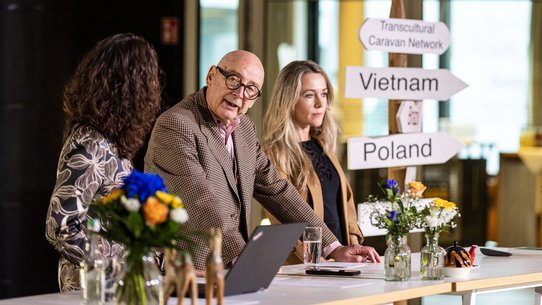
Cooperation under pressure and the quiet changes
Prof. Dr. Josef Wieland, founder of the Transcultural Caravan Network and holder of the Chair of Transcultural Leadership, describes in a short speech why leadership is more challenging today than ever before. Economic, political and technological upheavals are overlapping, while world regions are increasingly withdrawing from each other. "The will to cooperate internationally on an equal footing is declining," he says. His sentence resonates because it describes a development that many are observing: Distrust is growing faster than trust.
But Wieland also provides a counter-impulse: "Perhaps we will later realize that we were at a turning point here." He opens up hope: even in difficult times, we can shape decision-making moments if we recognize them.
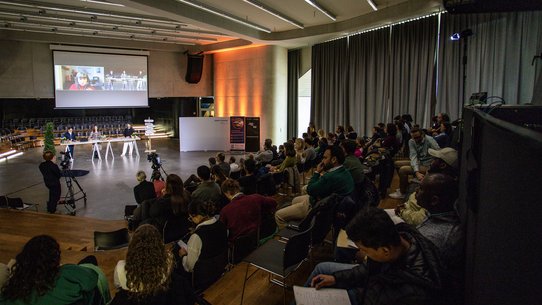
Cawa Younosi, Managing Director of the Diversity Charter, underlined this idea in his keynote speech by emphasizing that "respectful leadership" is the foundation of every successful organization, especially in times of great change. The Charta is a nationwide corporate network that has been promoting diversity in the workplace since 2006.
Moderator Grünfelder says that he is "primarily concerned about the silent transformations". By this he means developments that are barely noticed: automated processes, new decision-making logics, creeping political shifts. Moderator Baumann Montecinos adds that she sees the problem as "too many transformations affecting us at the same time." Many members of the audience nodded: If we understand these invisible currents together, we can also counter them.
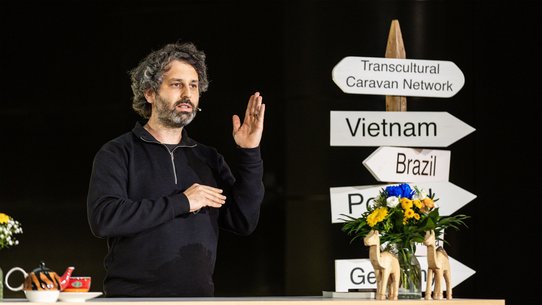
Keynote speaker Steffen Erath: Transformation sets things free
Steffen Erath, Head of Innovation and Sustainability at Hansgrohe and another important keynote speaker on this day, irritated the audience with the words: "Sustainability has an image crisis." In times of climate change? - Yes. What he means is that many companies treat sustainability like a late addition and that is precisely why it is becoming complicated. His appeal: planet, people and profit must be considered together from the outset.
In the subsequent discussion with him, designer and transformation expert Alexandra Deschamps-Sonsino shows how change can uncover the unexpected: for example, an old English bridge that only became visible when the river receded due to climate change. "Transformation reveals what was hidden," she says, striking a nerve.
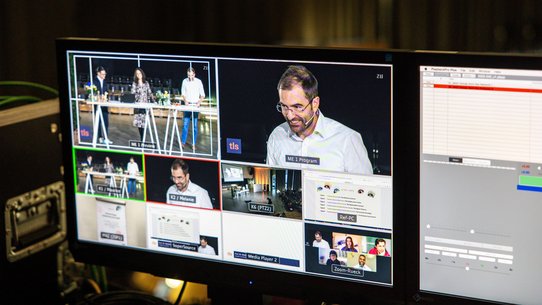
In a final discussion, moderated by Prof. Dr. Matthias Weiß, it becomes clear how differently regions deal with digital change. Sook-Jung Dofel, Director General of the German Society for International Cooperation, emphasizes: "Technological change must serve people, not the other way around." She makes it clear that technology should not be an end in itself. Eva Simone Lihotzky, Global AI Lead of the Serviceplan Group, also appeals to social responsibility and reminds us that AI is a process of continuous learning.
The voices from Pretoria and São Paulo show: Some countries are more pragmatic, others more cautious. But they are all united by one insight: digital transformation will only succeed if all those affected are part of the international process.
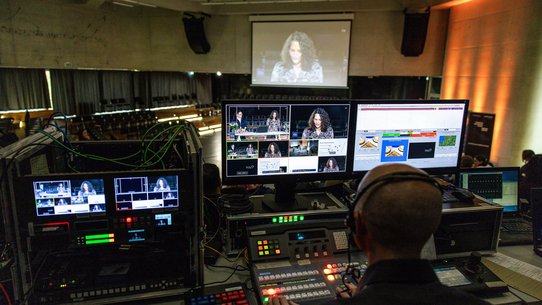
Abracadabra. The Transcultural Leadership Summit 2025 makes it clear that global challenges are not getting any smaller, but they can be better understood if perspectives are shared. This could be the turning point that Wieland spoke of: moments in which international discussions do not drift apart, but take place at eye level. The day makes it clear: orientation arises where exchange becomes possible. From Berlin to Hanoi, from Madrid to the Congo.
More articles
 08/17/2026LifeInvestor Summit Bodensee
Why Good Ideas Need the Right Connections
For founders seeking funding, the Investor Summit Bodensee is about much more than just a pitch on stage. After all, the most valuable connections are made afterward. 01/07/2025LifeTranscultural Leadership Summit
Connected from all over the world to answer the question: How can we work together constructively?
People from all over the world take part in the Transcultural Leadership Summit and exchange views on cross-cultural leadership issues. But how are cultural and geographical boundaries overcome online?- 09/27/2024LifeInvestor Summit Lake Constance
Investors and the public want to know exactly what's going on and put start-ups to the test
At the Investor Summit Bodensee, young start-ups presented their innovative ideas and solutions on the Zeppelin University campus. From artificial intelligence to revolutionary technologies in a wide range of industries, the focus was on ...  10/08/2026LifeVillage Hub
Starting a business is a matter of practice
This year's Village Hub focuses on the question: If AI makes companies smaller, flatter, and faster—what skills do founders actually still need?